

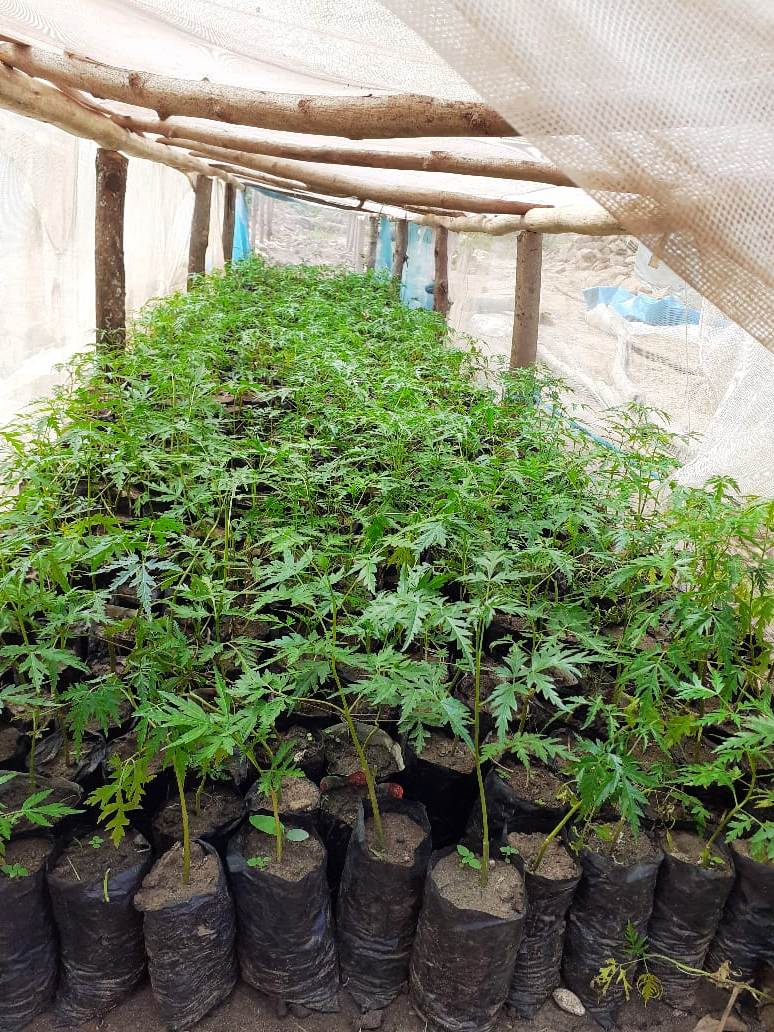
Species at a Glance
| Feature | Details |
|---|---|
| Scientific Name | Melia volkensii Gürke |
| Common Name | Mukau |
| Family | Meliaceae |
| Origin | East Africa |
| Tree Type | Deciduous hardwood tree |
| Height | 15 to 25 metres |
| Growth Rate | Fast |
| Lifespan | 50 to 80 years |
| Altitude | 350 to 1,700 metres above sea level |
| Annual Rainfall | 300 to 800 mm |
| Soil Preference | Deep, well-drained sandy loam to loamy soils |
| Drought Tolerance | Excellent |
| Frost Tolerance | Low |
| Main Uses | High-value timber, agroforestry, shade, furniture, construction, restoration |
| Conservation Status | Native species with increasing conservation importance |
Few indigenous tree species have transformed dryland forestry in Kenya as much as Melia volkensii, commonly known as Mukau.
For decades, farmers in Kenya’s arid and semi-arid regions struggled to find a tree that could survive prolonged drought while producing quality timber. Many exotic species either grew poorly under dry conditions or competed heavily with crops.
Mukau changed that.
It grows naturally in Kenya’s drylands, tolerates low rainfall, and produces durable timber that commands premium prices in local markets. These qualities have made it one of the country’s most promising commercial forestry species.
Its value extends beyond timber.
Mukau improves farm resilience, supports agroforestry, restores degraded land, and provides shade without creating dense competition for crops. As climate change places greater pressure on water resources, its ability to thrive in harsh environments makes it increasingly important for sustainable land management.
Today, Mukau is being promoted by farmers, researchers, county governments, and conservation organizations as one of the best indigenous trees for commercial planting in Kenya’s drylands.
This guide explains how to identify, grow, manage, and benefit from Melia volkensii, helping landowners make informed decisions before investing in this remarkable tree.
Scientific Classification
Understanding where Mukau fits within the plant kingdom helps explain many of its characteristics, including its timber quality and drought tolerance.
| Rank | Classification |
|---|---|
| Kingdom | Plantae |
| Clade | Angiosperms |
| Clade | Eudicots |
| Order | Sapindales |
| Family | Meliaceae |
| Genus | Melia |
| Species | Melia volkensii |
Mukau belongs to the Meliaceae family, commonly known as the mahogany family. This family includes many valuable timber species recognised for their strength, durability, and attractive wood grain.
Unlike Grevillea robusta, which was introduced from Australia, Melia volkensii is indigenous to East Africa. It has evolved under local climatic conditions, making it naturally suited to Kenya’s dry landscapes.
Common Names
Mukau is known by different names across East Africa, although the local name “Mukau” is the most widely recognised in Kenya.
| Language | Name |
|---|---|
| English | Mukau, African Melia |
| Scientific | Melia volkensii |
| Kiswahili | Mukau |
| Kenya | Mukau |
The name “Mukau” is commonly used by farmers, forestry professionals, and timber traders throughout the country.
Botanical Description
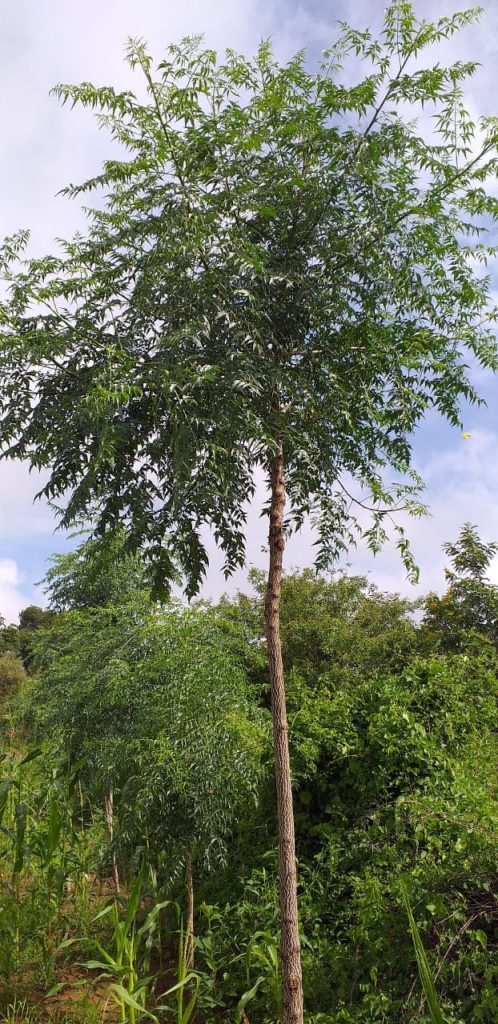
Melia volkensii is a medium to large deciduous tree with a straight trunk and a rounded, moderately open crown.
Under favourable conditions, mature trees typically reach 15 to 25 metres in height.
The trunk develops a cylindrical shape with relatively few lower branches when managed correctly, making it highly suitable for timber production.
Its bark is grey to brown and becomes rougher as the tree matures.
One of Mukau’s defining characteristics is that it sheds its leaves during prolonged dry periods. This natural adaptation reduces water loss and allows the tree to survive extended drought.
Once rainfall returns, fresh foliage develops rapidly.
Leaves
Mukau produces compound leaves made up of numerous small leaflets arranged along a central stalk.
The leaves are bright green during the growing season and create a light canopy that allows filtered sunlight to reach crops growing beneath.
This open canopy makes the tree well suited to agroforestry systems.
Flowers
Mukau produces small, fragrant flowers that range from pale lilac to white.
Flowering usually occurs shortly before or alongside the emergence of new leaves following seasonal rains.
The flowers attract a variety of pollinating insects, including honey bees.
Although they are less conspicuous than the bright flowers of Grevillea, they play an important ecological role in supporting pollinator populations.
Fruits and Seeds
The tree produces smooth, oval fruits that turn yellow as they mature.
Each fruit contains a hard seed that is commonly used for nursery propagation.
Seed collection requires careful timing because mature fruits can quickly be dispersed by wildlife and natural processes.
Fresh seed generally provides the best germination results.
How to Identify Melia volkensii
Mukau is relatively easy to recognise once its main features are understood.
Look for the following characteristics:
- Straight, cylindrical trunk.
- Rounded, open crown.
- Compound leaves with numerous leaflets.
- Seasonal leaf shedding during dry periods.
- Grey-brown bark.
- Small pale lilac or white flowers.
- Yellow oval fruits.
- Fast growth in dry environments.
Its combination of drought tolerance and open crown distinguishes it from many other timber species grown in Kenya.
Field Identification Checklist
| Characteristic | Description |
|---|---|
| Crown | Rounded and moderately open |
| Bark | Grey-brown, becoming rough with age |
| Leaves | Compound with many small leaflets |
| Flowers | Small, pale lilac to white, fragrant |
| Fruit | Smooth yellow oval drupe |
| Growth Form | Straight trunk with good timber form |
| Deciduous | Yes, during dry seasons |
Distribution and Natural Habitat
Melia volkensii is native to East Africa and is one of the few commercial timber trees naturally adapted to dry environments.
Unlike many exotic plantation species that require high rainfall, Mukau evolved in semi-arid landscapes where long dry seasons are common. This natural adaptation gives it a significant advantage in regions where water is limited.
Its ability to produce high-quality timber under these conditions has made it one of Kenya’s most important indigenous forestry species.
Distribution in Kenya
Mukau is naturally found across Kenya’s arid and semi-arid lands (ASALs), particularly in the eastern and southeastern parts of the country.
These regions experience low to moderate rainfall, high temperatures, and extended dry seasons that challenge many other commercial tree species.
Today, Mukau is both naturally occurring and widely planted in counties such as:
- Kitui
- Makueni
- Machakos
- Embu (lower areas)
- Tharaka Nithi
- Meru (lower eastern regions)
- Isiolo
- Tana River
- Garissa
- Baringo
- Kajiado
- Parts of Laikipia
Because of its excellent performance, planting has expanded beyond its natural range into other counties with similar climatic conditions.
Distribution Beyond Kenya
Melia volkensii is also found in neighbouring East African countries, including:
- Tanzania
- Ethiopia
- Somalia
Although it is less widely planted outside Kenya, interest in the species continues to grow because of its commercial value and drought tolerance.
Researchers are increasingly studying Mukau as a climate-resilient timber species suitable for dryland forestry across Africa.
Natural Habitat
Mukau naturally grows in open woodlands, dry forests, and savannah ecosystems.
Unlike rainforest trees that depend on constant moisture, it has evolved to survive prolonged dry periods with limited rainfall.
These ecosystems typically experience:
- Long dry seasons.
- Short but intense rainy seasons.
- Well-drained soils.
- High daytime temperatures.
- Periodic drought.
These natural conditions explain why Mukau performs exceptionally well in Kenya’s drylands while struggling in permanently wet environments.
Ecology
Mukau plays an important ecological role in dryland ecosystems.
Its canopy provides shade for livestock and wildlife, while its flowers support bees and other pollinating insects.
As a deciduous species, the tree sheds its leaves during dry seasons.
This natural cycle reduces water loss and produces leaf litter that gradually decomposes, returning nutrients to the soil.
Its root system also helps stabilize fragile soils that are vulnerable to erosion during heavy rainfall.
Although Mukau is primarily valued for timber, it also contributes to healthier and more resilient landscapes.
Where Mukau Grows Best
Mukau performs best in Kenya’s warm, dry regions where rainfall is moderate rather than excessive.
It thrives under conditions that would limit the growth of many other commercial timber species.
Ideal growing conditions
| Factor | Preferred Range |
|---|---|
| Altitude | 350 to 1,700 metres |
| Rainfall | 300 to 800 mm annually |
| Temperature | 20°C to 35°C |
| Soil | Deep, well-drained sandy loam or loam |
| Soil pH | 6.0 to 8.0 |
| Sunlight | Full sun |
Its broad adaptability makes it suitable for many ASAL counties where forestry options have traditionally been limited.
Soil Requirements
Mukau grows best in deep, fertile soils that drain freely after rainfall.
Good drainage is essential.
Roots require oxygen to grow properly, and prolonged waterlogging can lead to poor growth, root diseases, and reduced survival.
The tree performs particularly well in:
- Sandy loam soils.
- Loamy soils.
- Well-drained red soils.
- Light clay-loam soils with good drainage.
Heavy clay soils that remain saturated for long periods should generally be avoided.
Rainfall Requirements
One of Mukau’s greatest strengths is its ability to grow with relatively little rainfall.
Unlike Grevillea or Cypress, which perform best in wetter highland regions, Mukau can establish and thrive where annual rainfall is much lower.
Young seedlings still require adequate moisture during establishment.
Once established, however, the tree survives extended dry periods far better than many other commercial species.
This makes it an attractive option for farmers looking to diversify income without relying on high-rainfall conditions.
Temperature
Mukau is well adapted to warm climates.
It grows vigorously where daytime temperatures remain high for much of the year.
Extreme cold and prolonged frost can damage young trees.
For this reason, the species is generally not recommended for Kenya’s highest elevations.
Warm conditions combined with seasonal rainfall provide the best environment for rapid growth.
Sunlight Requirements
Mukau requires full sunlight throughout its life.
It is not a shade-tolerant species.
Seedlings planted beneath dense tree cover often develop slowly because they receive insufficient light.
Open planting sites encourage straighter stems, stronger crowns, and better timber development.
For commercial plantations, avoiding excessive shading is essential.
Root System
Mukau develops a deep and extensive root system.
This allows the tree to access moisture stored deeper in the soil during dry seasons.
Compared with many shallow-rooted species, this characteristic improves drought tolerance and helps stabilize soils in erosion-prone landscapes.
Its root architecture also makes it well suited to agroforestry when appropriate spacing is maintained.
As with any tree, competition with crops increases if trees are planted too closely together.
Good spacing allows both trees and crops to perform well.
Suitable Agroecological Zones
Mukau performs particularly well in:
- Semi-arid farming zones.
- Dry woodland regions.
- Lower midland agroecological zones.
- Rangeland restoration projects.
- Mixed crop-livestock farming systems.
- Community woodlots.
It is one of the few commercial timber species capable of producing high-value wood under these conditions.
Where Mukau Is Less Suitable
Although Mukau is highly adaptable, it is not the right choice for every location.
Growth may be poor in:
- High-rainfall montane forests.
- Permanently waterlogged soils.
- Cold high-altitude areas prone to frost.
- Coastal regions with saline soils.
- Areas with poor drainage.
Matching the tree to the site is one of the most important decisions a farmer can make.
Choosing a species outside its preferred ecological range often leads to slow growth, poor timber quality, and lower financial returns.
Table: Ideal Growing Conditions for Mukau
| Requirement | Ideal Condition |
|---|---|
| Altitude | 350 to 1,700 m |
| Rainfall | 300 to 800 mm |
| Temperature | 20°C to 35°C |
| Sunlight | Full sun |
| Soil Drainage | Excellent |
| Soil Fertility | Moderate to high |
| Drought Tolerance | Excellent |
| Waterlogging | Poor tolerance |
| Frost | Low tolerance |
Propagation and Plantation Management
Growing a productive Mukau plantation starts with good planning.
The quality of the seedling, the planting site, and the management practices used during the first few years have a greater influence on timber quality than any other stage of the tree’s life. Well-managed trees develop straight stems, healthy crowns, and strong root systems that support faster growth and higher-value timber.
Fortunately, Mukau responds well to good management and rewards patience.
Propagation
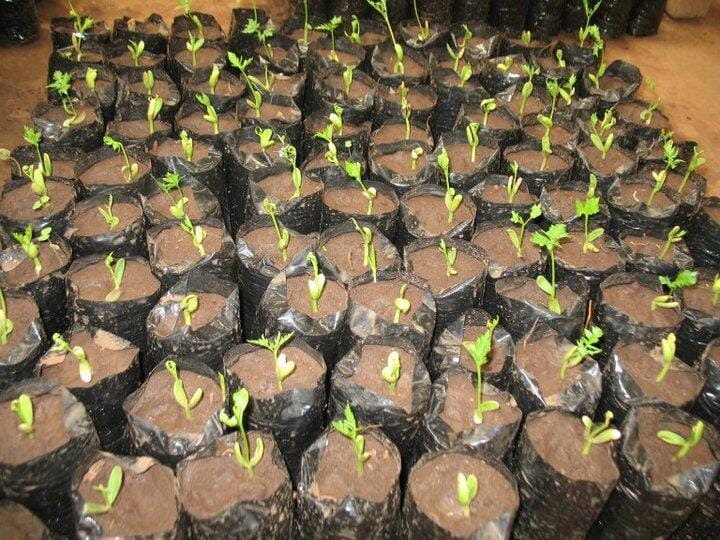
Melia volkensii is propagated mainly from seed.
Although research has explored vegetative propagation and tissue culture, seed propagation remains the most practical and affordable method for farmers and commercial nurseries.
Because Mukau is indigenous, seed should ideally be collected from healthy local populations or certified seed orchards. This helps preserve desirable genetic traits such as rapid growth, straight stems, and drought tolerance.
Seed Collection
Healthy seedlings begin with quality seed.
Seeds should be collected from mature, vigorous trees that show:
- Straight stems.
- Strong branching structure.
- Good growth rate.
- No signs of pests or disease.
- High-quality timber characteristics.
Avoid collecting seed from isolated, unhealthy, or poorly formed trees.
Mukau fruits usually mature several months after flowering. Once ripe, they turn yellow and fall naturally to the ground, making collection relatively easy.
Seed Preparation
Mukau seeds have a hard outer covering that can slow germination.
To improve germination rates, many nurseries soak seeds in clean water for 24 to 48 hours before sowing. This softens the seed coat and allows moisture to penetrate more easily.
Seeds should then be planted promptly in a well-prepared nursery medium.
Fresh seed generally produces better germination than seed stored for long periods.
Nursery Management
Healthy nurseries produce healthy plantations.
Mukau seedlings should be raised in individual containers filled with fertile, well-drained growing media.
Young seedlings require:
- Regular but moderate watering.
- Full sunlight after establishment.
- Weed control.
- Good air circulation.
- Protection from browsing animals.
Excessive watering is one of the most common nursery mistakes.
Waterlogged conditions encourage root diseases and weak root development.
Choosing Quality Seedlings
Not every seedling should be planted.
Investing in healthy planting material improves survival, growth, and future timber quality.
Look for seedlings with:
- Straight stems.
- Healthy green leaves.
- Well-developed roots.
- No pest or disease damage.
- Balanced shoot and root growth.
Avoid seedlings that are root-bound, leaning, yellowing, or visibly stressed.
Saving money on poor-quality seedlings often leads to greater losses later.
Site Selection
Choosing the right site is one of the most important decisions before planting Mukau.
Although the species tolerates drought, it still requires suitable soils and adequate space to achieve its full potential.
Ideal planting sites should have:
- Well-drained soils.
- Full sunlight.
- Moderate soil fertility.
- Low risk of flooding.
- Minimal competition from existing trees.
Good site selection reduces management problems throughout the plantation’s life.
Land Preparation
Proper land preparation gives seedlings the best possible start.
Before planting:
- Remove weeds.
- Mark planting positions.
- Dig planting holes well before the rainy season.
- Separate topsoil from subsoil during digging.
- Return fertile topsoil to the planting hole before planting.
Adding well-decomposed organic manure can improve early growth, especially on degraded land.
Best Time to Plant
Mukau should be planted at the beginning of the rainy season.
Early planting allows seedlings to establish strong root systems before dry weather returns.
In most ASAL counties, timing is particularly important because rainfall seasons are often short and unpredictable.
Where irrigation is available, planting windows become more flexible.
Spacing
Proper spacing affects both timber quality and farm productivity.
Trees planted too closely compete for sunlight and nutrients, while excessive spacing encourages heavy branching and poorer timber form.
Recommended spacing depends on the intended use.
Suggested spacing
| Objective | Recommended Spacing |
|---|---|
| Commercial timber plantation | 3 m × 3 m |
| Agroforestry | 8 to 12 m between trees |
| Boundary planting | 4 to 6 m |
| Restoration projects | 3 to 5 m |
Wider spacing is usually preferred when crops are grown between trees.
Watering
Mukau is highly drought tolerant after establishment.
Young seedlings, however, still require adequate moisture during their first growing season.
If rainfall is insufficient, occasional deep watering is more effective than frequent shallow watering.
Once roots reach deeper soil layers, the tree becomes much more resilient during dry periods.
Weed Management
Young Mukau seedlings compete poorly with aggressive weeds.
Keeping a weed-free area around each tree during the first two years greatly improves survival and growth.
Mulching provides additional benefits by:
- Conserving soil moisture.
- Reducing weed growth.
- Improving soil structure.
- Moderating soil temperature.
Organic mulch should be placed around the tree without touching the stem directly.
Fertility Management
Mukau generally grows well in moderately fertile soils.
On nutrient-poor sites, incorporating compost or well-rotted manure during planting supports early establishment.
Routine fertiliser application is usually unnecessary unless soil tests indicate nutrient deficiencies.
Healthy soils, proper spacing, and weed control often have a greater impact on growth than fertiliser alone.
Pruning
Pruning is essential for producing straight, knot-free timber.
Without pruning, Mukau develops larger side branches that reduce timber quality.
Pruning should begin while branches are still small.
Early intervention allows wounds to heal quickly and reduces the risk of decay.
Large branches should never be removed unnecessarily, as they create larger wounds that take longer to close.
Formative Pruning
Some young trees produce more than one main stem.
These competing leaders reduce timber quality if left unmanaged.
Formative pruning removes extra stems while the tree is still young, encouraging the development of a single, straight trunk.
This simple practice greatly increases the value of future sawlogs.
Thinning
Commercial plantations require periodic thinning.
As trees grow, competition for sunlight, water, and nutrients increases.
Removing selected trees allows the remaining individuals to develop larger stems and better crowns.
Benefits of thinning include:
Harvesting
The ideal harvesting age depends on the intended product.
Farmers producing poles harvest earlier than those targeting premium sawlogs.
Typical rotation periods include:
| Product | Approximate Rotation |
|---|---|
| Poles | 8 to 12 years |
| Small timber | 12 to 15 years |
| Premium sawlogs | 18 to 25 years |
Actual rotation length depends on rainfall, soil fertility, stocking density, and management.
Common Management Mistakes
Most plantation failures are caused by management rather than the tree itself.
Common mistakes include:
- Planting poor-quality seedlings.
- Selecting unsuitable sites.
- Delaying planting until after the rains.
- Poor weed control.
- Incorrect pruning.
- Planting trees too closely.
- Ignoring early pest problems.
- Expecting rapid financial returns without active management.
Avoiding these mistakes significantly improves plantation performance.
Table: Best Management Practices for Mukau
| Practice | Recommendation |
|---|---|
| Planting Season | Beginning of the rainy season |
| Seedling Source | Certified nursery |
| Soil | Deep and well-drained |
| Weed Control | Regular during first two years |
| Watering | During establishment when needed |
| Pruning | Begin early while branches are small |
| Thinning | As canopy competition increases |
| Harvest Planning | Based on intended timber product |
Key Takeaway
Mukau is naturally adapted to Kenya’s drylands, but successful plantations still require good management. Healthy seedlings, careful site selection, proper spacing, early pruning, and regular maintenance consistently produce straighter trees, better timber, and higher long-term returns. These practices allow farmers to maximise both the environmental and economic value of one of Kenya’s most important indigenous timber species.
End of Part 4
In Part 5, we’ll complete the article with **Pests and Diseases, Conservation Status, Climate Change Outlook, Similar Species Comparison, “Should You Plant Mukau?” decision guide, SEO-optimized FAQs, and the conclusion. This will wrap up the article while keeping it within our 4,000-word target.
Pests and Diseases
One of Mukau’s greatest strengths is its natural resilience.
Compared to many commercial tree species, Melia volkensii experiences relatively few serious pest and disease problems when planted in suitable environments. Healthy trees growing on well-drained sites usually require minimal intervention.
Like all living organisms, however, Mukau is not immune. Poor management, prolonged stress, or unsuitable growing conditions can increase its vulnerability.
Regular monitoring allows farmers to detect problems early before they affect timber quality or plantation productivity.
Common Insect Pests
Young seedlings are generally more susceptible to insect damage than mature trees.
The most common pests include:
- Termites
- Leaf-eating caterpillars
- Aphids
- Scale insects
- Stem-boring insects
Termites deserve particular attention in dryland areas.
They can damage young roots and stems, especially during prolonged drought when alternative food sources are limited. Protecting seedlings during establishment significantly improves survival.
Fortunately, mature Mukau trees are much less vulnerable.
Common Diseases
Mukau has relatively good resistance to most serious tree diseases.
The few diseases that occur are often associated with poor site conditions rather than the species itself.
Potential problems include:
- Root rot in poorly drained soils.
- Fungal leaf spot.
- Stem cankers following injuries.
- Nursery damping-off in young seedlings.
Most of these problems can be prevented through proper nursery hygiene, good drainage, and careful plantation management.
Signs of Poor Tree Health
Routine inspection is one of the simplest management practices.
Watch for:
- Yellowing leaves.
- Premature leaf fall.
- Slow growth.
- Dead branches.
- Cracked bark.
- Fungal growth.
- Heavy insect infestation.
- Wilted shoots.
These symptoms do not always indicate disease.
Sometimes they result from drought, nutrient deficiencies, poor soils, or physical damage.
Correct diagnosis is important before taking action.
Integrated Pest Management
Successful forestry relies on prevention rather than treatment.
Good management practices include:
- Buying certified seedlings.
- Planting on suitable sites.
- Maintaining proper spacing.
- Avoiding waterlogged conditions.
- Controlling weeds.
- Removing damaged branches.
- Monitoring plantations regularly.
Chemical pesticides should only be considered when economically justified and after confirming the cause of the problem.
Healthy plantations naturally experience fewer pest outbreaks.
Conservation Status
Unlike many valuable hardwood species, Melia volkensii is indigenous to Kenya.
This gives it special ecological importance.
Although it is not currently classified as globally threatened, natural populations have declined in some areas due to:
- Land conversion.
- Unsustainable harvesting.
- Charcoal production.
- Expansion of agriculture.
- Climate pressures.
As a result, conservation organisations increasingly encourage farmers to plant Mukau on farms rather than relying solely on natural forests.
Commercial planting not only produces timber but also helps conserve the species for future generations.
Climate Change and Future Outlook
Climate change is changing how forestry is practised across Kenya.
Longer droughts, unpredictable rainfall, and rising temperatures are making species selection more important than ever.
Mukau is well positioned for this future.
Its natural adaptation to dry environments makes it one of Kenya’s most climate-resilient commercial tree species.
As rainfall becomes more variable, demand for drought-tolerant indigenous trees is expected to increase.
Researchers are also studying Mukau for its potential role in:
- Climate adaptation.
- Landscape restoration.
- Carbon sequestration.
- Sustainable timber production.
- Dryland ecosystem recovery.
This growing interest is likely to increase both commercial demand and conservation efforts.
Similar Species
Mukau is often compared with other commercial forestry trees grown in Kenya.
Although each species has advantages, few combine drought tolerance and premium hardwood production as effectively as Mukau.
| Feature | Melia volkensii | Grevillea robusta | Eucalyptus grandis |
|---|---|---|---|
| Origin | Indigenous | Exotic | Exotic |
| Best Climate | Semi-arid | Highlands | Highlands |
| Drought Tolerance | Excellent | Moderate | Moderate |
| Growth Rate | Fast | Fast | Very Fast |
| Timber Quality | Excellent | Very Good | Good |
| Agroforestry | Excellent | Excellent | Moderate |
| Water Demand | Low to Moderate | Moderate | Higher |
| Shade Competition | Low | Low | Higher |
This comparison highlights why Mukau has become a preferred species for farmers in Kenya’s ASAL counties.
Should You Plant Mukau?
Mukau is not the right tree for every location, but for suitable environments it is one of the strongest long-term forestry investments available.
Mukau is an excellent choice if you:
- Farm in semi-arid or dry regions.
- Want high-value indigenous timber.
- Practice agroforestry.
- Need a drought-tolerant tree.
- Plan to invest for the long term.
- Want to improve farm resilience.
Consider another species if you:
- Farm in cold, high-altitude areas.
- Have permanently waterlogged soils.
- Need a very short harvesting cycle.
- Grow in coastal saline environments.
Selecting the right species for the right site remains the foundation of successful forestry.
Frequently Asked Questions
Is Mukau indigenous to Kenya?
Yes. Melia volkensii is indigenous to Kenya and other parts of East Africa. It naturally grows in dry woodland ecosystems.
How fast does Mukau grow?
Mukau is considered a fast-growing hardwood. Growth varies depending on rainfall, soil quality, and management.
Is Mukau suitable for dry areas?
Yes. It is one of Kenya’s best commercial timber trees for semi-arid and arid regions because of its excellent drought tolerance.
How long does Mukau take to mature?
Trees grown for premium timber are typically harvested after 18 to 25 years, although poles and smaller products can be harvested earlier.
Can Mukau be planted with crops?
Yes. Its relatively open canopy makes it suitable for agroforestry when planted at appropriate spacing.
Is Mukau timber valuable?
Yes. Mukau timber is widely valued for furniture, joinery, construction, and interior finishing because of its strength, stability, and attractive grain.
What rainfall does Mukau require?
Mukau performs best in areas receiving approximately 300 to 800 mm of annual rainfall.
Does Mukau require irrigation?
Only during establishment where rainfall is insufficient. Mature trees are highly drought tolerant.
Can Mukau help restore degraded land?
Yes. It is widely used in dryland restoration because it stabilises soils, improves vegetation cover, and supports biodiversity.
Is Mukau better than eucalyptus?
They serve different purposes. Mukau performs better in dry environments and produces premium hardwood, while Eucalyptus generally grows faster in wetter areas and is commonly planted for poles and pulpwood.
Final Thoughts
Melia volkensii represents the future of climate-smart forestry in Kenya.
It is one of the few indigenous trees that combines commercial value with environmental resilience. Farmers can produce premium hardwood while improving soil health, supporting biodiversity, and restoring degraded landscapes.
Its ability to thrive in dry conditions makes it particularly valuable as Kenya adapts to a changing climate. For counties where water is limited and rainfall is unpredictable, Mukau offers an opportunity to build productive forests without relying on species that require wetter conditions.
Success, however, depends on good management. Choosing quality seedlings, planting on suitable sites, pruning early, and maintaining healthy plantations all contribute to better timber and stronger financial returns.
Whether you are a farmer, investor, student, or forestry professional, Mukau deserves serious consideration. It is more than just another timber tree. It is a species that demonstrates how indigenous forestry can support both economic development and sustainable land management.
One response to “Melia volkensii (Mukau): The complete Guide to Growing, Managing & Uses.”
Hallo, I have got a piece of land measuring 6 acres in kiu area in Mukaa and j would like plant trees i.e Pine or Mukima or cypress . What can you recommend?