

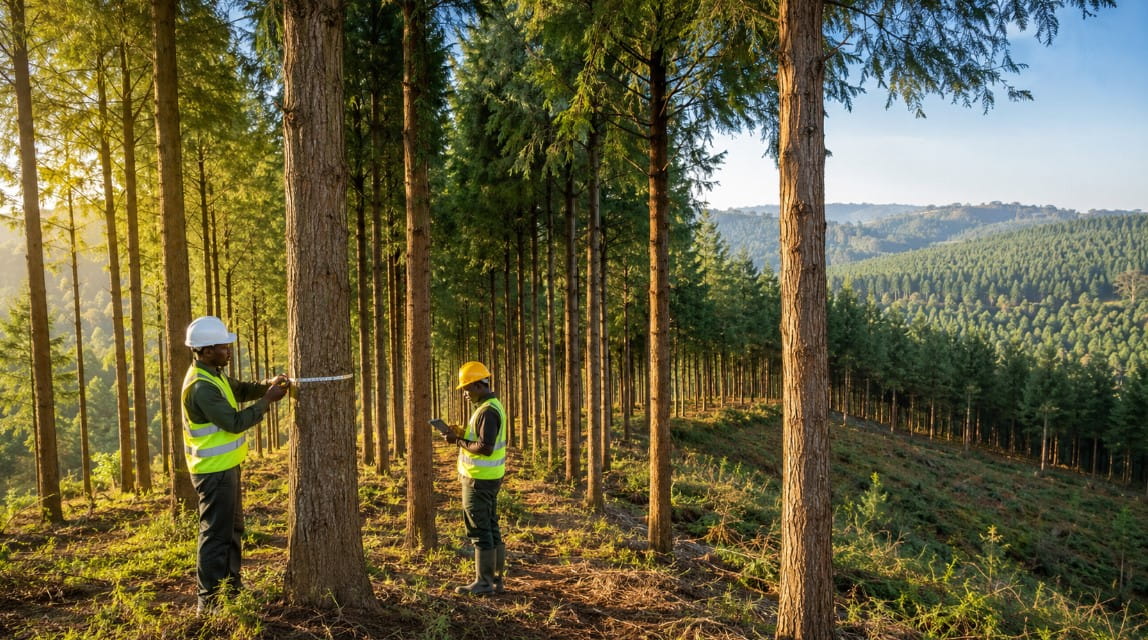
Quick Facts
| Attribute | Details |
|---|---|
| Common Name | Mexican Cypress |
| Scientific Name | Cupressus lusitanica Mill. |
| Family | Cupressaceae |
| Native / Exotic | Exotic in Kenya |
| Tree Type | Evergreen conifer |
| Mature Height | 20 to 35 metres, occasionally taller |
| Crown Spread | 6 to 12 metres |
| Growth Rate | Fast |
| Lifespan | 80 to 150 years |
| Altitude Range | 1,200 to 3,000 metres above sea level |
| Annual Rainfall | 900 to 2,000 mm |
| Temperature | 10°C to 28°C |
| Preferred Soils | Deep, fertile, well-drained soils |
| Conservation Status | Not threatened globally |
| Best Uses | Timber, utility poles, windbreaks, shelterbelts, carbon sequestration, ornamental planting |
Species at a Glance
| Characteristic | Rating |
|---|---|
| Growth Rate | ⭐⭐⭐⭐⭐ |
| Timber Value | ⭐⭐⭐⭐⭐ |
| Drought Tolerance | ⭐⭐⭐☆☆ |
| Frost Tolerance | ⭐⭐⭐⭐☆ |
| Wildlife Value | ⭐⭐⭐☆☆ |
| Carbon Storage | ⭐⭐⭐⭐⭐ |
| Agroforestry Suitability | ⭐⭐⭐⭐☆ |
| Urban Suitability | ⭐⭐⭐☆☆ |
| Maintenance | Medium |
| Beginner Friendly | Yes |
1. Introduction
Few tree species have shaped Kenya’s commercial forestry sector as much as Cupressus lusitanica, commonly known as Mexican Cypress.
Walk through many plantation forests in the Central Highlands, Rift Valley, Mount Kenya region, or parts of Western Kenya, and you are likely to find rows of these tall, straight trees. For decades, they have supplied timber for homes, schools, furniture, utility poles, and countless construction projects across the country.
Its popularity comes from a combination of qualities that foresters value. Mexican Cypress grows relatively quickly, produces high-quality timber, develops a straight stem, and adapts well to many of Kenya’s highland environments. These characteristics have made it one of the country’s preferred plantation species alongside pine and eucalyptus.
The tree also plays an important environmental role. Well-managed plantations help reduce pressure on indigenous forests by providing a sustainable source of wood products. They also capture carbon, protect soils, reduce wind speeds, and contribute to landscape restoration when planted in appropriate locations.
Despite its common name, Mexican Cypress is no longer viewed simply as an introduced species. After more than a century of cultivation, it has become an integral part of Kenya’s forestry industry and continues to support livelihoods, rural development, and commercial forestry investments.
Understanding this species helps explain why it remains one of the most widely planted conifers in East Africa.
2. Scientific Classification
2.1 Taxonomy
| Classification | Name |
|---|---|
| Kingdom | Plantae |
| Division | Pinophyta |
| Class | Pinopsida |
| Order | Pinales |
| Family | Cupressaceae |
| Genus | Cupressus |
| Species | Cupressus lusitanica |
| Author Citation | Mill. |
| Accepted Scientific Name | Cupressus lusitanica Mill. |
2.2 Botanical Synonyms
Over the years, botanists have described this species using several scientific names. Modern taxonomy recognises Cupressus lusitanica as the accepted scientific name, although older forestry publications may reference historical synonyms.
Some literature also refers to it as:
- Cupressus lindleyi
- Cupressus benthamii (in some historical classifications)
These names are now largely regarded as taxonomic synonyms or regional interpretations rather than separate species.
2.3 Family Overview
Mexican Cypress belongs to the Cupressaceae family, a large group of evergreen conifers found across many parts of the world.
Other well-known members include:
- Junipers (Juniperus)
- Arborvitae (Thuja)
- Redwoods (Sequoia)
- Lawson Cypress (Chamaecyparis lawsoniana)
Members of this family are recognised for their durable wood, evergreen foliage, aromatic resin, and long life spans.
2.4 Origin and Introduction to Kenya
Although widely planted throughout East Africa, Mexican Cypress is not native to Kenya.
Its natural range extends through mountainous regions of:
- Mexico
- Guatemala
- Honduras
- El Salvador
The species was introduced into Kenya during the colonial period after foresters recognised its ability to perform well under highland conditions similar to those found in Central America.
Field trials demonstrated excellent growth, good timber quality, and strong adaptability. As a result, the species became one of Kenya’s principal plantation trees and remains an important component of commercial forestry programmes today.
3. Common Names
The widespread cultivation of Cupressus lusitanica has resulted in several common names depending on the country, region, and language.
In Kenya, the tree is almost always referred to as Mexican Cypress or simply Cypress. Among foresters, surveyors, and timber merchants, “cypress” generally refers to this species unless another member of the Cupressus genus is specifically mentioned.
Some of its recognised common names include:
| Language / Region | Common Name |
|---|---|
| English | Mexican Cypress |
| English | Cypress |
| Scientific | Cupressus lusitanica |
| Spanish | Ciprés Mexicano |
| Forestry Trade | Cypress |
Because of its importance in commercial forestry, the name “cypress” has become synonymous with quality softwood timber in many parts of Kenya.
4. Botanical Description
Mexican Cypress is an evergreen conifer that develops a tall, straight trunk and a dense crown. Under favourable conditions, it forms attractive plantations with uniform growth and excellent stem quality.
Its appearance changes as it matures, making age an important factor when identifying the tree.
4.1 Overall Form
Young trees usually have a narrow, conical crown with branches extending almost to the ground.
As the tree matures, the lower branches gradually shed, leaving a long, straight bole with a more rounded or irregular upper crown.
In plantation settings where trees are closely spaced, self-pruning often produces clean stems that are highly valued for timber production.
4.2 Height and Size
Mexican Cypress is considered a large tree.
Under normal Kenyan plantation conditions, mature trees commonly reach between 20 and 35 metres in height. Exceptional specimens growing on deep, fertile soils may exceed 40 metres.
Stem diameters typically range from 50 to 100 centimetres, although older trees may become considerably larger.
4.3 Bark
The bark provides one of the easiest identification features.
Young trees have relatively smooth bark that is grey to reddish-brown.
As the tree ages, the bark becomes thicker, fibrous, and deeply fissured. Long strips often peel away naturally, exposing fresh layers beneath.
This fibrous texture helps distinguish mature cypress from many other plantation species.
4.4 Leaves
Unlike broadleaf trees, Mexican Cypress produces tiny scale-like leaves.
These scales overlap tightly along slender branchlets, giving the foliage a soft, feathery appearance.
The leaves are usually:
- Dark green to bluish-green.
- Evergreen throughout the year.
- Strongly aromatic when crushed.
- Closely pressed against the twigs.
The pleasant resinous scent is a characteristic feature of the species.
4.5 Cones
Mexican Cypress produces separate male and female cones on the same tree.
Male cones are small and release large quantities of pollen during the flowering season.
Female cones are woody, nearly spherical, and typically measure 1 to 2.5 centimetres in diameter. They begin green before gradually turning brown as they mature.
Each cone contains numerous small seeds protected beneath woody scales.
4.6 Seeds
The seeds are relatively small, flattened, and light brown.
Each seed has narrow wings that assist dispersal by wind after the cones open.
Seed production usually begins when trees are around six to eight years old, although commercial seed collection is generally carried out from mature, well-formed trees selected for breeding programmes.
4.7 Root System
Mexican Cypress develops a strong root system when grown on suitable soils.
Young trees establish a deep anchoring root before expanding extensive lateral roots that improve stability.
Well-developed roots help the species tolerate moderate winds, although shallow soils or waterlogged conditions may reduce anchorage and increase the risk of windthrow.
5. Natural Distribution and Habitat
Although Mexican Cypress has become closely associated with forestry in Kenya, its natural home lies thousands of kilometres away.
The species evolved in the mountainous regions of Central America, where cool temperatures, seasonal rainfall, and well-drained volcanic soils create favourable growing conditions.
Those environmental conditions closely resemble many of Kenya’s highland landscapes, which explains why the species adapted so successfully after its introduction.
5.1 Native Distribution
The natural range of Cupressus lusitanica includes:
- Mexico
- Guatemala
- Honduras
- El Salvador
Within these countries, the species typically grows in upland forests between 1,300 and 3,000 metres above sea level.
These elevations experience moderate temperatures, reliable rainfall, and fertile mountain soils that support vigorous growth.
5.2 Distribution in Kenya
Today, Mexican Cypress is widely planted throughout Kenya’s highland regions.
It is commonly found in:
- Central Kenya
- Rift Valley
- Mount Kenya region
- Aberdare Range
- Western Kenya Highlands
- Mau Forest region
- Parts of Eastern Highlands
The species is particularly common in government plantations, private commercial forests, institutional woodlots, and farm forestry projects.
Many county governments also promote cypress planting for timber production and environmental restoration.
5.3 Preferred Habitat
Mexican Cypress performs best under cool, moist conditions.
It thrives where rainfall is reliable and temperatures remain moderate throughout the year.
Ideal growing conditions include:
- Deep, fertile soils.
- Good natural drainage.
- Moderate humidity.
- Gentle to moderate slopes.
- Full sunlight.
Although young seedlings benefit from careful management, mature trees tolerate seasonal dry periods better than many people expect.
5.4 Altitude Range
Altitude has a significant influence on growth performance.
In Kenya, the species performs best between:
- 1,500 and 2,700 metres above sea level.
Growth slows at lower elevations where temperatures become consistently high.
Similarly, extremely cold locations with prolonged frost may reduce productivity, particularly during the early stages of establishment.
5.5 Rainfall Requirements
Reliable rainfall supports healthy growth and good timber production.
The recommended annual rainfall ranges between:
- 900 and 2,000 millimetres.
Where rainfall is lower, supplementary moisture during establishment may improve survival.
Extended droughts can reduce growth rates and increase susceptibility to diseases such as cypress canker.
5.6 Soil Preferences
The species grows well across a range of soil types provided drainage is good.
Preferred soils include:
- Deep volcanic soils.
- Well-drained loams.
- Sandy loams.
- Clay loams with good structure.
Poorly drained or permanently waterlogged soils should be avoided because prolonged root saturation increases disease risk and reduces tree vigour.
Healthy soils remain one of the most important factors influencing plantation productivity.
6. Ecology and Growing Requirements
Mexican Cypress is one of Kenya’s most adaptable plantation species, but it performs best when grown under suitable environmental conditions. Choosing the right site has a direct impact on survival, growth rate, timber quality, and resistance to pests and diseases.
Understanding its ecological requirements helps foresters maximise productivity while reducing management challenges.
6.1 Climate
The species prefers a cool to warm tropical highland climate.
It grows well in areas with moderate temperatures throughout the year and performs particularly well where seasonal rainfall is dependable. Although mature trees can tolerate short dry periods, prolonged drought reduces growth and weakens overall tree health.
Regions with cool nights and mild daytime temperatures generally produce the highest-quality timber.
6.2 Temperature
Optimal growth occurs where average temperatures range between 10°C and 28°C.
Young seedlings are more sensitive to extreme heat and prolonged frost than mature trees. Once established, however, the species becomes considerably more resilient and can tolerate occasional cold conditions common in Kenya’s highland regions.
Very high temperatures combined with low rainfall often reduce plantation performance.
6.3 Rainfall
Rainfall is one of the most important factors affecting growth.
Annual precipitation of 900 to 2,000 millimetres provides ideal conditions for healthy plantations. Evenly distributed rainfall throughout the year supports continuous growth and improves stem development.
Where rainfall is unreliable, planting should coincide with the onset of the rainy season to improve seedling survival.
6.4 Soil Requirements
Mexican Cypress grows best on fertile, deep, and well-drained soils.
The ideal soil should:
- Be rich in organic matter.
- Drain excess water efficiently.
- Allow deep root penetration.
- Maintain moderate moisture without becoming waterlogged.
Volcanic soils found in many parts of Central Kenya and the Rift Valley provide particularly favourable conditions.
Heavy clay soils that remain saturated for long periods should be avoided because poor drainage encourages root diseases.
6.5 Light Requirements
This species is highly light-demanding.
Young trees require full sunlight for vigorous growth and proper crown development. Dense shade slows growth, reduces stem quality, and increases competition for resources.
Commercial plantations are therefore established in open areas with minimal shading from surrounding vegetation.
6.6 Wind Tolerance
Well-established Mexican Cypress tolerates moderate winds reasonably well.
Its extensive root system provides good anchorage under suitable soil conditions, while the flexible crown reduces wind resistance.
However, plantations growing on shallow soils or exposed hilltops may experience wind damage during severe storms.
Good plantation design, including windbreaks where necessary, helps reduce these risks.
6.7 Drought Tolerance
Compared to many broadleaf plantation species, Mexican Cypress shows moderate drought tolerance.
Mature trees survive seasonal dry periods better than young seedlings because of their well-developed root systems.
Extended droughts, however, reduce growth, increase stress, and make trees more vulnerable to pests and diseases. Maintaining healthy plantation conditions remains the best defence against drought-related problems.
7. Propagation and Nursery Management
The success of any plantation begins long before trees reach the field.
Healthy seedlings develop into stronger plantations, produce better timber, and require less maintenance during establishment. For this reason, careful nursery management is an essential part of growing Mexican Cypress.
7.1 Seed Collection
Seed should be collected from healthy, mature trees with desirable characteristics.
Foresters typically select parent trees that demonstrate:
- Straight stems.
- Fast growth.
- Good crown form.
- Disease resistance.
- High timber quality.
Using seed from superior trees improves the overall performance of future plantations.
Cones are harvested once they turn brown and begin to mature but before they naturally release their seeds.
7.2 Seed Processing
After collection, cones are dried under shade or in a well-ventilated area.
As they dry, the woody scales gradually open and release the seeds.
The seeds are then cleaned by removing cone fragments and other debris before storage or sowing.
Proper drying is important because excessive heat can reduce seed viability.
7.3 Seed Storage
Fresh seed generally produces the highest germination rates.
When storage is necessary, seeds should be kept in cool, dry conditions inside airtight containers to maintain viability.
Under suitable storage conditions, Mexican Cypress seed remains viable for several years.
7.4 Germination
Seeds are usually sown in prepared nursery beds or germination trays containing well-drained growing media.
Light covering with fine soil or sand is sufficient because the seeds are relatively small.
Germination commonly begins within two to four weeks, depending on temperature and moisture conditions.
Consistent watering helps maintain uniform germination without causing waterlogging.
7.5 Seedling Management
Once seedlings emerge, they require regular care.
Good nursery management includes:
- Moderate but consistent watering.
- Weed control.
- Adequate spacing.
- Protection from pests.
- Balanced fertilisation where necessary.
Seedlings should receive enough sunlight to encourage sturdy growth while avoiding prolonged moisture stress.
7.6 Transplanting into Containers
After developing several true leaves, seedlings are transferred into individual containers.
Polythene tubes remain the most common nursery containers in Kenya, although root trainers are increasingly being adopted because they promote healthier root development.
High-quality potting media should contain fertile topsoil, sand, and well-decomposed organic matter.
Healthy root development during this stage strongly influences field performance after planting.
7.7 Hardening-Off
Before field planting, seedlings undergo a hardening process.
Watering is gradually reduced, and seedlings are exposed to full outdoor conditions over several weeks.
Hardening strengthens stems, improves root development, and prepares young trees for environmental conditions in the field.
Properly hardened seedlings establish faster and experience lower transplant shock after planting.
8. Planting and Establishment
A well-managed planting season lays the foundation for a productive plantation.
Even the highest-quality seedlings will struggle if they are planted at the wrong time or under poor field conditions. Careful site preparation and proper planting techniques improve survival rates, encourage rapid early growth, and reduce future maintenance costs.
8.1 Site Selection
The first step is choosing a suitable planting site.
Mexican Cypress performs best on gently sloping or moderately undulating land with fertile, well-drained soils. Sites that remain waterlogged after heavy rain should be avoided because excess moisture encourages root diseases.
Areas with good access also make future management, thinning, and harvesting more efficient.
8.2 Land Preparation
Good land preparation reduces competition during the establishment phase.
Before planting, the site should be cleared of aggressive weeds, shrubs, and unwanted vegetation. Existing tree stumps or large roots should be removed where they interfere with planting.
Where slopes are steep, soil conservation measures such as contour planting help reduce erosion and improve water retention.
8.3 Planting Season
Timing has a major influence on seedling survival.
In Kenya, planting is normally carried out at the beginning of the long or short rainy season. This allows seedlings to establish strong root systems before dry conditions return.
Planting immediately after the first effective rains generally produces the best results.
8.4 Planting Holes
Planting holes should be prepared before seedlings are transported to the field.
A common recommendation is holes measuring approximately:
- 45 cm × 45 cm × 45 cm
Loosening the surrounding soil encourages early root development and improves water infiltration.
Where soils are poor, well-decomposed organic manure can be mixed with the topsoil before backfilling.
8.5 Planting Procedure
Healthy seedlings should be handled carefully to avoid damaging the root system.
The seedling is placed upright in the centre of the planting hole before the soil is firmly pressed around the roots to remove air pockets.
The root collar should remain level with the surrounding ground surface. Planting too deeply may reduce growth, while shallow planting exposes roots to drying.
Where rainfall is insufficient, watering immediately after planting improves establishment.
8.6 Recommended Spacing
Spacing depends on the plantation objective.
Typical recommendations include:
| Plantation Purpose | Recommended Spacing |
|---|---|
| Timber production | 2.5 m × 2.5 m |
| Utility poles | 2.5 m × 2.5 m |
| Shelterbelts | 2 m to 3 m between trees |
| Farm woodlots | 3 m × 3 m |
| Ornamental planting | 4 m to 6 m |
Closer spacing encourages straight stems by increasing natural competition for light. Wider spacing produces larger crowns and thicker stems but may require additional pruning.
8.7 Early Maintenance
The first two years are critical.
Young trees compete directly with surrounding weeds for water, nutrients, and sunlight. Regular weeding helps seedlings establish quickly while reducing moisture stress.
Routine maintenance during this period typically includes:
- Weed control.
- Replacement of dead seedlings.
- Protection against livestock.
- Monitoring for pests and diseases.
- Light soil cultivation where necessary.
Well-maintained plantations often achieve significantly higher survival rates than neglected sites.
9. Silvicultural Management
Planting marks the beginning of forest management, not the end.
Once Mexican Cypress is established, continuous silvicultural practices help improve timber quality, increase productivity, and reduce losses from disease or poor stem development.
Good management also shortens the time required for trees to reach commercial size.
9.1 Weeding
Weeds compete aggressively with young trees during the early years.
Grass, shrubs, and broadleaf weeds reduce access to water, nutrients, and sunlight, slowing tree growth.
Most plantations require regular weeding during the first two to three years until tree crowns begin to close and naturally suppress competing vegetation.
9.2 Pruning
Pruning is carried out to improve timber quality.
Lower branches are removed to encourage the production of long, knot-free logs suitable for construction timber and furniture manufacturing.
Good pruning practices include:
- Removing only selected lower branches.
- Avoiding excessive pruning in a single operation.
- Using clean, sharp tools.
- Preventing unnecessary bark damage.
Proper pruning produces higher-value timber while reducing future defects.
9.3 Thinning
As plantations mature, competition between trees increases.
Without thinning, trees compete for sunlight, water, and nutrients, resulting in slower growth and smaller stem diameters.
Thinning removes selected trees to create additional growing space for the remaining crop.
Benefits include:
- Faster diameter growth.
- Improved timber quality.
- Better crown development.
- Reduced disease pressure.
- Easier plantation access.
Several thinning operations may be carried out during the plantation rotation depending on management objectives.
9.4 Fertilisation
On fertile sites, Mexican Cypress often grows well without additional fertiliser.
However, nutrient-poor soils may benefit from carefully planned fertilisation during the establishment phase.
Soil analysis provides the best guide for determining nutrient deficiencies before fertilisers are applied.
Balanced nutrition encourages healthy root development and vigorous early growth.
9.5 Rotation Age
The appropriate harvesting age depends on the intended end use.
Typical rotation periods are:
| Product | Approximate Rotation |
|---|---|
| Poles | 12 to 18 years |
| Construction timber | 20 to 30 years |
| High-quality sawlogs | 30 to 40 years |
Good management can improve both timber quality and financial returns throughout the rotation.
9.6 Plantation Monitoring
Successful forestry relies on continuous observation.
Regular inspections help identify:
- Poor growth.
- Storm damage.
- Disease outbreaks.
- Pest infestations.
- Fire risks.
- Illegal activities.
Early intervention usually prevents minor problems from becoming major plantation losses.
Well-managed plantations are monitored throughout their entire life cycle rather than only at planting or harvesting.
10. Growth Rate and Yield
One of the main reasons Mexican Cypress remains a preferred plantation species in Kenya is its excellent growth performance.
Under good management, the species establishes quickly, develops a straight stem, and produces commercial timber within a relatively short period. Growth varies depending on climate, soil quality, spacing, genetics, and management practices, but well-managed plantations consistently outperform poorly maintained ones.
10.1 Growth Rate
Mexican Cypress is classified as a fast-growing plantation tree.
During the first few years, young trees invest heavily in root development before accelerating stem growth. Once established, annual height increments can be impressive under favourable conditions.
Typical growth includes:
- Height increase of 1 to 2 metres per year during the active growth phase.
- Diameter growth averaging 1.5 to 3 centimetres annually on productive sites.
- Rapid canopy development that naturally suppresses competing weeds.
Growth slows gradually as the plantation matures, allowing trees to allocate more resources to stem thickening and wood production.
10.2 Timber Yield
Productivity depends on plantation management and site quality.
Commercial plantations on fertile soils with proper spacing, pruning, and thinning can produce high timber volumes suitable for sawmills, construction, and utility poles.
Well-managed stands often produce:
- High proportions of straight sawlogs.
- Uniform stem diameters.
- Minimal branching after pruning.
- Good timber recovery during milling.
These characteristics explain why the species remains popular among commercial forestry investors.
10.3 Factors Affecting Growth
Several factors influence plantation performance.
Positive factors include:
- Fertile soils.
- Reliable rainfall.
- Quality seedlings.
- Good weed control.
- Timely thinning.
- Proper pruning.
Growth may decline where plantations experience:
- Poor drainage.
- Prolonged drought.
- Heavy weed competition.
- Disease outbreaks.
- Nutrient deficiencies.
- Delayed management operations.
Consistent management throughout the rotation often has a greater impact on productivity than any single intervention.
11. Uses of Cupressus lusitanica
Few plantation trees offer the versatility of Mexican Cypress.
Its combination of fast growth, durable timber, attractive appearance, and adaptability allows it to serve many different purposes across Kenya’s forestry, construction, and agricultural sectors.
11.1 Timber Production
Timber remains the species’ most important commercial product.
The wood is moderately light, easy to machine, and finishes well, making it suitable for numerous construction and manufacturing applications.
Common timber uses include:
- Structural timber.
- Roofing timber.
- Wall framing.
- Floor joists.
- Doors.
- Window frames.
- Interior finishing.
Properly seasoned timber also performs well in furniture manufacturing.
11.2 Furniture
Mexican Cypress is widely used by furniture makers.
Its relatively straight grain, pleasant colour, and ease of machining allow carpenters to produce high-quality products with smooth finishes.
It is commonly used for:
- Tables.
- Chairs.
- Wardrobes.
- Cabinets.
- Shelving.
- Office furniture.
Its workability makes it popular among both small workshops and large manufacturers.
11.3 Utility Poles
The straight stem is particularly valuable for utility pole production.
When properly treated with preservatives, cypress poles provide long service life for:
- Electricity distribution.
- Telephone networks.
- Farm fencing.
- Structural supports.
The demand for treated poles continues to make the species economically attractive for plantation investors.
11.4 Plywood and Wood Products
The timber can also be processed into a range of manufactured wood products.
These include:
- Plywood.
- Veneers.
- Joinery.
- Interior panelling.
- Packaging materials.
Its consistent wood quality supports efficient industrial processing.
11.5 Windbreaks and Shelterbelts
Beyond timber production, Mexican Cypress performs well as a windbreak.
Dense evergreen foliage slows wind movement, helping protect:
- Crops.
- Livestock.
- Farm buildings.
- Roads.
- Homesteads.
Properly designed shelterbelts also reduce soil erosion caused by strong winds.
11.6 Ornamental Planting
The tree’s symmetrical crown and evergreen foliage make it attractive for landscaping.
It is commonly planted in:
- Schools.
- Churches.
- Government institutions.
- Public parks.
- Large residential compounds.
Its formal appearance makes it particularly suitable for avenues and boundary planting.
11.7 Carbon Sequestration
Like other fast-growing plantation species, Mexican Cypress captures significant amounts of atmospheric carbon dioxide.
As trees grow, carbon becomes stored within:
- Wood.
- Bark.
- Roots.
- Branches.
- Forest soils.
Well-managed plantations therefore contribute to climate change mitigation while continuing to produce renewable timber resources.
11.8 Environmental Restoration
The species is frequently included in restoration programmes.
It helps stabilise degraded landscapes, protect exposed soils, reduce erosion, and establish long-term tree cover on suitable sites.
Although indigenous species remain the preferred choice for restoring natural forests, Mexican Cypress plays an important role in commercial plantations established to reduce harvesting pressure on native ecosystems.
12. Economic Importance
Mexican Cypress has become one of the economic foundations of Kenya’s plantation forestry industry.
Its value extends far beyond timber production. The species supports employment, generates income for farmers, supplies raw materials to industries, and contributes to national economic development.
12.1 Commercial Forestry
Large commercial plantations rely heavily on Mexican Cypress because of its dependable growth and strong market demand.
The species provides predictable returns over long rotations while producing timber suitable for a wide range of industries.
Its versatility reduces market risk because plantation owners can supply several product categories from the same forest.
12.2 Farm Income
Thousands of Kenyan farmers have integrated cypress woodlots into their farming systems.
Trees act as long-term savings that can be harvested when money is needed for:
- School fees.
- Farm expansion.
- Medical expenses.
- Home construction.
- Business investment.
This flexibility makes tree farming an important financial asset for many rural households.
12.3 Employment
The cypress value chain creates jobs throughout the forestry sector.
Employment opportunities include:
- Seed collection.
- Nursery production.
- Plantation establishment.
- Forest management.
- Harvesting.
- Timber transport.
- Sawmilling.
- Furniture manufacturing.
- Construction.
Every stage contributes to local economic activity.
12.4 Industrial Development
Many Kenyan wood-processing industries depend on reliable plantation timber supplies.
Sawmills, treatment plants, furniture manufacturers, and construction companies all benefit from the availability of sustainably grown cypress timber.
A stable plantation resource also reduces pressure on indigenous forests by meeting commercial timber demand through renewable sources.
12.5 Long-Term Investment
Forestry requires patience, but it can offer attractive long-term returns.
Well-managed cypress plantations continue increasing in value as trees mature. Combined with growing demand for quality timber and increasing interest in sustainable forestry, the species remains one of Kenya’s most important commercial tree investments.
13. Environmental Importance
Although Mexican Cypress is primarily planted for timber production, its environmental value should not be overlooked.
When managed responsibly and established in suitable locations, cypress plantations provide a wide range of ecosystem services that benefit both people and the environment. These plantations also reduce harvesting pressure on indigenous forests by supplying a sustainable source of wood products.
13.1 Carbon Sequestration
Like all trees, Mexican Cypress absorbs carbon dioxide from the atmosphere through photosynthesis.
As the tree grows, it stores carbon in its trunk, branches, roots, and surrounding soil. Because the species grows quickly and produces substantial biomass, it can capture significant amounts of carbon over its lifetime.
Commercial plantations therefore contribute to climate change mitigation while continuing to provide renewable timber resources.
13.2 Soil Conservation
The extensive root system helps stabilise soil and reduce erosion.
On sloping land, tree roots bind the soil together while the canopy softens the impact of heavy rainfall. Fallen leaves also form a protective layer that reduces surface runoff and improves soil structure over time.
These characteristics make Mexican Cypress useful for protecting vulnerable landscapes where erosion is a concern.
13.3 Water Catchment Protection
Healthy forests play an important role in regulating water movement.
Although fast-growing plantation species should not replace indigenous forests within sensitive water catchments, well-managed cypress plantations established outside protected catchment areas can still contribute to watershed protection by:
- Reducing surface runoff.
- Improving water infiltration.
- Protecting soils.
- Reducing sediment entering rivers and dams.
Good site selection remains essential to achieving these benefits.
13.4 Biodiversity Support
A cypress plantation cannot provide the same biodiversity value as a natural indigenous forest.
Indigenous forests support a far greater variety of plants, birds, insects, mammals, and microorganisms because they contain many different native tree species and habitat types.
Even so, mature cypress plantations still provide shelter for numerous birds, small mammals, reptiles, and insects. They can also serve as ecological corridors that connect fragmented forest landscapes.
Their contribution to biodiversity is greatest when plantations are integrated with indigenous vegetation rather than replacing it.
13.5 Reducing Pressure on Indigenous Forests
Perhaps the species’ greatest environmental contribution is indirect.
Every cubic metre of timber harvested from a sustainably managed cypress plantation reduces demand for timber from Kenya’s indigenous forests.
This allows natural forests to continue providing vital ecosystem services such as:
- Biodiversity conservation.
- Water regulation.
- Climate resilience.
- Wildlife habitat.
- Cultural heritage.
Commercial plantations and indigenous forests should therefore be viewed as complementary components of sustainable forestry rather than competing land uses.
14. Pests and Diseases
Like every plantation species, Mexican Cypress is vulnerable to a number of pests and diseases.
Most healthy plantations experience relatively few serious problems. However, poor site selection, prolonged drought, overcrowding, or inadequate management can increase susceptibility to disease outbreaks.
Regular monitoring remains the most effective strategy for protecting plantation health.
14.1 Cypress Canker
Cypress canker is the most important disease affecting Cupressus lusitanica worldwide.
It is caused by fungal pathogens in the Seiridium group.
Typical symptoms include:
- Dead branches.
- Sunken bark lesions.
- Heavy resin flow.
- Yellowing foliage.
- Progressive dieback.
- Eventual tree death in severe cases.
Trees weakened by drought or physical damage are generally more susceptible.
Good plantation management, careful site selection, and removal of infected material help reduce disease spread.
14.2 Aphids
Several aphid species occasionally attack young cypress trees.
These insects feed by sucking plant sap from tender shoots and foliage.
Heavy infestations may cause:
- Yellowing leaves.
- Distorted new growth.
- Reduced vigour.
- Honeydew deposits that encourage sooty mould.
Natural predators often keep aphid populations under control, although severe outbreaks may require intervention.
14.3 Bark Beetles
Bark beetles usually attack stressed or weakened trees rather than healthy plantations.
Adult beetles bore into the bark to lay eggs, while developing larvae feed beneath the bark and disrupt the tree’s water transport system.
Maintaining vigorous plantations greatly reduces the likelihood of serious infestations.
14.4 Root Diseases
Poor drainage increases the risk of root infections.
Waterlogged soils encourage fungal pathogens that damage roots and reduce tree stability.
Affected trees may show:
- Slow growth.
- Yellowing foliage.
- Crown thinning.
- Root decay.
- Windthrow.
Selecting well-drained planting sites remains the most effective preventive measure.
14.5 Fire Damage
Fire is not a biological pest, but it represents one of the greatest threats to plantation forestry.
Young plantations are particularly vulnerable because thin bark provides little protection from intense heat.
Good fire management includes:
- Maintaining firebreaks.
- Removing excessive dry vegetation.
- Restricting open burning near plantations.
- Monitoring during the dry season.
- Training workers in fire prevention and response.
Preventing fire is far less costly than recovering from it.
15. Advantages and Limitations
Every tree species has strengths and weaknesses.
Understanding both allows landowners and foresters to decide whether Mexican Cypress is the right choice for their objectives and growing conditions.
15.1 Advantages
Mexican Cypress offers numerous benefits that explain its continued popularity across Kenya.
Its main advantages include:
- Fast growth under suitable conditions.
- High-quality timber with strong market demand.
- Straight stems suitable for sawlogs and poles.
- Good adaptability to Kenya’s highland climates.
- Evergreen foliage that provides year-round cover.
- Moderate tolerance to seasonal drought.
- Strong carbon sequestration potential.
- Excellent response to pruning and thinning.
- Long commercial life.
- Reliable returns for commercial forestry investors.
These characteristics make it one of Kenya’s leading plantation species.
15.2 Limitations
Despite its strengths, the species is not suitable for every situation.
Some important limitations include:
- Susceptibility to cypress canker.
- Reduced performance on poorly drained soils.
- Lower biodiversity value than indigenous forests.
- Unsuitable for very hot, low-altitude environments.
- Requires ongoing silvicultural management for high-quality timber.
- Can suffer wind damage on shallow soils or exposed sites.
- Young seedlings require protection during establishment.
Selecting the right site and applying good management practices significantly reduces many of these challenges.
16. Key Takeaways
- Mexican Cypress (Cupressus lusitanica) is one of Kenya’s most important commercial plantation tree species.
- It grows best in cool, highland regions with fertile, well-drained soils and reliable rainfall.
- The species produces high-quality timber used for construction, furniture, utility poles, and joinery.
- Proper pruning, thinning, and weed management greatly improve timber quality and plantation productivity.
- Sustainable cypress plantations help reduce pressure on indigenous forests by supplying renewable timber.
- Healthy plantations also contribute to carbon storage, soil conservation, and landscape restoration.
- Although susceptible to diseases such as cypress canker, careful management keeps most plantations productive throughout their rotation.
- For commercial forestry in Kenya’s highlands, Mexican Cypress remains one of the most dependable long-term investments.
Continue
17. Frequently Asked Questions
17.1 What is Cupressus lusitanica?
Cupressus lusitanica, commonly known as Mexican Cypress, is a fast-growing evergreen conifer widely planted in Kenya for commercial timber production. It is valued for its straight stem, durable wood, and adaptability to highland conditions.
17.2 Is Mexican Cypress native to Kenya?
No. Mexican Cypress is native to Central America, particularly Mexico, Guatemala, Honduras, and El Salvador. It was introduced into Kenya over a century ago and has since become one of the country’s most important plantation tree species.
17.3 Where does Mexican Cypress grow best in Kenya?
The species performs best in Kenya’s highland regions between 1,500 and 2,700 metres above sea level. It thrives in areas with annual rainfall of 900 to 2,000 mm, moderate temperatures, and deep, well-drained soils.
17.4 How fast does Mexican Cypress grow?
Under good management, Mexican Cypress is considered a fast-growing species. Young trees can grow between 1 and 2 metres in height each year, depending on soil fertility, rainfall, and plantation management.
17.5 What is Mexican Cypress used for?
The tree has many commercial and environmental uses, including:
- Construction timber.
- Furniture making.
- Utility poles.
- Joinery.
- Windbreaks.
- Shelterbelts.
- Carbon sequestration.
- Ornamental planting.
- Commercial plantation forestry.
17.6 Is Mexican Cypress good for farm forestry?
Yes. It is one of Kenya’s most popular farm forestry species because it produces valuable timber while serving as a long-term investment. Farmers often establish small woodlots to generate future income and meet on-farm timber needs.
17.7 How long does it take to harvest Mexican Cypress?
Harvesting depends on the intended product.
Typical rotation periods are:
- Utility poles: 12 to 18 years
- Construction timber: 20 to 30 years
- Premium sawlogs: 30 to 40 years
Good silvicultural management can improve both timber quality and financial returns.
17.8 What is the biggest threat to Mexican Cypress?
The most significant disease affecting the species is cypress canker, a fungal disease that causes branch dieback, bark lesions, and tree mortality in severe cases. Proper site selection, regular monitoring, and good plantation management help reduce the risk of infection.
17.9 Can Mexican Cypress tolerate drought?
The species has moderate drought tolerance once established. Mature trees survive seasonal dry periods reasonably well, but prolonged drought reduces growth and increases susceptibility to pests and diseases.
17.10 Is Mexican Cypress suitable for restoring indigenous forests?
Not generally.
While Mexican Cypress contributes to reforestation and commercial timber production, indigenous tree species remain the preferred choice for restoring natural forests, biodiversity, and sensitive water catchment areas.
18. Related Species
If you’re interested in Mexican Cypress, you may also want to explore these important forestry species:
- Pinus patula (Patula Pine)
- Pinus radiata (Radiata Pine)
- Grevillea robusta (Silky Oak)
- Melia volkensii (Mukau)
- Juniperus procera (African Pencil Cedar)
- Eucalyptus grandis (Rose Gum)
These species are widely planted across Kenya for commercial forestry, agroforestry, environmental restoration, and timber production.
Conclusion
Mexican Cypress has earned its place as one of Kenya’s most valuable plantation tree species. Its rapid growth, reliable timber quality, and adaptability have made it a cornerstone of commercial forestry for decades, supporting industries, creating rural livelihoods, and supplying the wood products that drive the country’s construction and manufacturing sectors.
Its value, however, extends beyond timber. Well-managed cypress plantations capture carbon, protect soils, reduce pressure on indigenous forests, and contribute to sustainable land management when planted in appropriate locations. These environmental benefits reinforce the species’ role in Kenya’s broader forestry and climate goals.
Success with Cupressus lusitanica depends on matching the tree to the right site and applying sound silvicultural practices throughout the plantation’s life. Careful species selection, quality planting material, timely pruning and thinning, and regular monitoring all contribute to healthier forests and higher-value timber.
As demand for sustainably produced wood continues to grow, Mexican Cypress will remain an important part of Kenya’s forestry landscape. When managed responsibly, it offers long-term economic returns while supporting the sustainable development of the country’s forest resources.
Leave a Reply