


Forestry is both affected by and contributes to climate change. Trees and forests have the ability to sequester carbon dioxide from the atmosphere, contributing to climate change mitigation. The carbon sequestration potential of afforestation/reforestation varies based on species, site and the forest management practices. Typically, sequestration rates for afforestation/reforestation are: 0.8 to 2.4 tonnes /year in boreal forests, 0.7 to 7.5 tonnes/year in temperate regions and 3.2 to 10 tonnes/year in the tropics. The sequestration potential for agroforestry practices is dependent on the tree population density and the systems’ production objectives hence highly variable. On the other hand, deforestation and forest degradation and/or conversion contribute to greenhouse gas emissions, exacerbating climate change. It is estimated that deforestation and forest degradation contributes to about 11% of carbon dioxide equivalent emissions globally annually.
Climate change is already having significant impacts on forests, including changes in the distribution and composition of tree species, increased forest fires and insect outbreaks, and changes in the timing of seasonal events such as flowering and leaf drop. These impacts can have significant social and economic consequences, including the loss of forest-based livelihoods and increased risk of natural disasters. Models adopted from WCMC predict that different forests types will suffer unique consequences as shown below.
Boreal forests: will experience the largest temperature increases of all forests. The warming effect is expected to be greater in winter and slightly lower in summer. Reduced moisture in the soil during summer will increase drought stress and the frequency and extent of wildfires. Climate zones are expected to shift northwards by as much as 5 km per year. Boreal forests will make gains in areas to the north, but will experience dieback and replacement to the south. Changes in the frequency, intensity and extent of wildfires in response to increased heat stress will play a critical role in determining the dynamics of the changes at the southern fringe of the boreal forests. Models used to predict the long-term potential changes in the distribution of vegetation suggest that the overall response may be either a reduction (by up to 36 percent) or an expansion (by up to 16 percent) in boreal forest area, although a reduction is more likely. Few tree species are likely to become extinct, but local species loss may be significant.
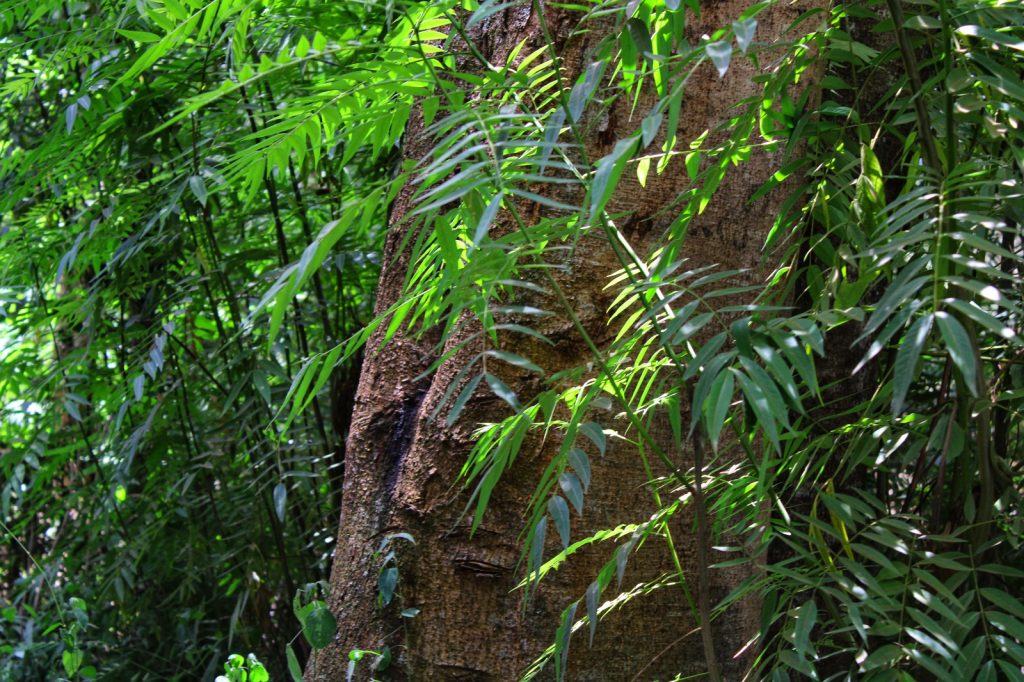
Temperate forests: will be most affected by increasing temperature at higher latitudes and by changes in rainfall at lower latitudes. Drought stress at certain low-latitude margins (such as the Mediterranean and South-western United States) may lead to significant dieback, while increased temperatures may enhance growth at higher latitudes. Climate zones will shift towards the poles at rates of up to 5 km per year. The potential area available for temperate forest growth is likely to expand by between 7 and 58 percent. The high level of fragmentation of many temperate forests is likely to limit effective dispersal of some tree species (will impact forest-based wildlife). This may lead to significant species losses locally.
Tropical forests: are expected to warm by 2°C above the levels of the 1970s by 20150, with larger increases in continental interiors. Changes in rainfall regime, however, are likely to be more important than changes in temperature, although model predictions of regional rainfall patterns vary substantially. Where there are reductions in rainfall and higher temperatures, reduced soil moisture is expected to be the most significant threat to tropical forests. These effects may increase vulnerability to fire or lead to significant dieback or changes in vegetation types in marginal areas. Internal variability as a result of large-scale climatic events (such as those caused by the El Niño phenomenon) may exacerbate rainfall extremes. Depending on future climate scenarios, the potential tropical forest area could shrink by as much as 30 percent or expand by up to 38 percent. In most tropical regions, however, the impact of human activities such as deforestation or burning will be more important than climate change in determining forest cover. A shrinking of the area of tropical forests, particularly of moist tropical forests, would be likely to result in significant species losses.
Tropical montane cloud forests: are expected to warm by to 2°C by 2050, but they are most threatened by changes in the height of the cloud base, on which they depend for dry season water supply. Cloud base heights are likely to rise by as much as 2 m per year – which would affect the species in these forests. Where mountains are isolated and insufficiently high to accommodate upward changes in cloud height, climate change may lead to the local, if not total, extinction of some montane vegetation species (many of which are endemics). There is evidence from cloud forest in Montverde, Costa Rica that such changes are already occurring. Cloud forests may be harbingers of climate change effects on global forest ecosystems.
Mangrove forests: are expected to be able to adapt to rising temperatures but may be threatened by rising sea levels. This threat will be particularly acute for sediment-poor coasts, such as those found on small islands, and in areas where inland dispersal of forest species is constrained by human land use.
There are a number of strategies that can be employed to address the impacts of climate change on forests and to mitigate greenhouse gas emissions. They include:
- Forest conservation and restoration: Protecting existing forests and restoring degraded lands can help sequester carbon and enhance the resilience of forest ecosystems.
- Sustainable forest management: Sustainable forest management practices such as reduced-impact logging, reforestation, and agroforestry can help reduce greenhouse gas emissions and promote forest resilience.
- Forest carbon markets: Carbon markets can provide financial incentives for the protection and restoration of forests, which if utilized well can lead to reduction in greenhouse gas emissions.
- Research and development: Investment in research and development can help identify new strategies for addressing climate change in the forestry sector, including the development of new technologies for forest monitoring and management.
- International and multi sectorial cooperation: Cooperation between countries and/or territories and within sectors is necessary to address the global nature of climate change and to ensure that forests are included in global efforts to mitigate greenhouse gas emissions.
Leave a Reply