


If you have travelled along the central highlands of Kenya the possibility of having seen a grevillea tree is high. Commonly known as the silky oak, grevillea is most common in the regions mentioned above. The local names for the tree species according to the World Agroforestry include Mukima (Kamba), Mubariti (Kikuyu), Omokabiria (Kisii), Kapkawet (Nandi) and Eshichuma (Luhya).
The ever-green tree originated from the south eastern Australia and was introduced in coffee farms for shading. It is now widely grown in the country in coffee and tea zones. The tree grows well in areas between 850m-2500m altitude with an annual rainfall mean of 600mm- 1500mm. It is best suited for well drained fertile soils and grows to a height of 20m with a diameter of up to 25cm in a period of 15-20 years.
Grevillea is mainly propagated through seeds and wildings. It is mainly planted along boundaries, in woodlots, or scattered among crops. Some of the management activities for the tree include pruning that reduces light interference for the crops hence reducing competition and pollarding, removal of the crown, which is done to improve the tree diameter.
Grevillea has several uses hence ideal for a farm setting. Its multibranched nature makes the tree ideal for firewood used in homesteads. The leaves of the trees are used as fodder during the dry season and also as beddings for diary animals in the zero-grazing method. The golden yellow flowers produced by the trees attract bees which can help in improving bee farming on a farm.
Other uses for the tree include timber, poles and posts, bee forage, mulch, wind breaks, shading, ornamental and soil conservation. Grevillea is gaining popularity in the commercial forestry sector. Upon maturity of the trees, it is advisable to sell the trees as timber and not as a whole tree. This attracts more returns to the farmers.
For more information on Grevillea robusta click on the link below.
https://www.kefri.org/PDF/Leaflets/GrevillearobustainKenyaflyer.pdf
Grevillea robusta (Silky Oak): The Complete Guide to Growing, Managing, and Using Grevillea Trees in Kenya
Species at a Glance
| Feature | Details |
|---|---|
| Scientific Name | Grevillea robusta A.Cunn. ex R.Br. |
| Common Name | Silky Oak |
| Family | Proteaceae |
| Origin | Eastern Australia |
| Tree Type | Fast-growing evergreen tree |
| Height | 20 to 35 metres, occasionally taller |
| Growth Rate | Fast |
| Lifespan | 50 to 100 years under favourable conditions |
| Altitude | 600 to 2,400 metres above sea level |
| Annual Rainfall | 700 to 2,000 mm |
| Soil Preference | Deep, well-drained loam or sandy loam |
| Drought Tolerance | Moderate once established |
| Frost Tolerance | Low to moderate |
| Main Uses | Agroforestry, timber, shade, windbreaks, bee forage, ornamental planting |
| Conservation Status | Not threatened globally |
Few trees have shaped Kenya’s farming landscape as much as Grevillea robusta.
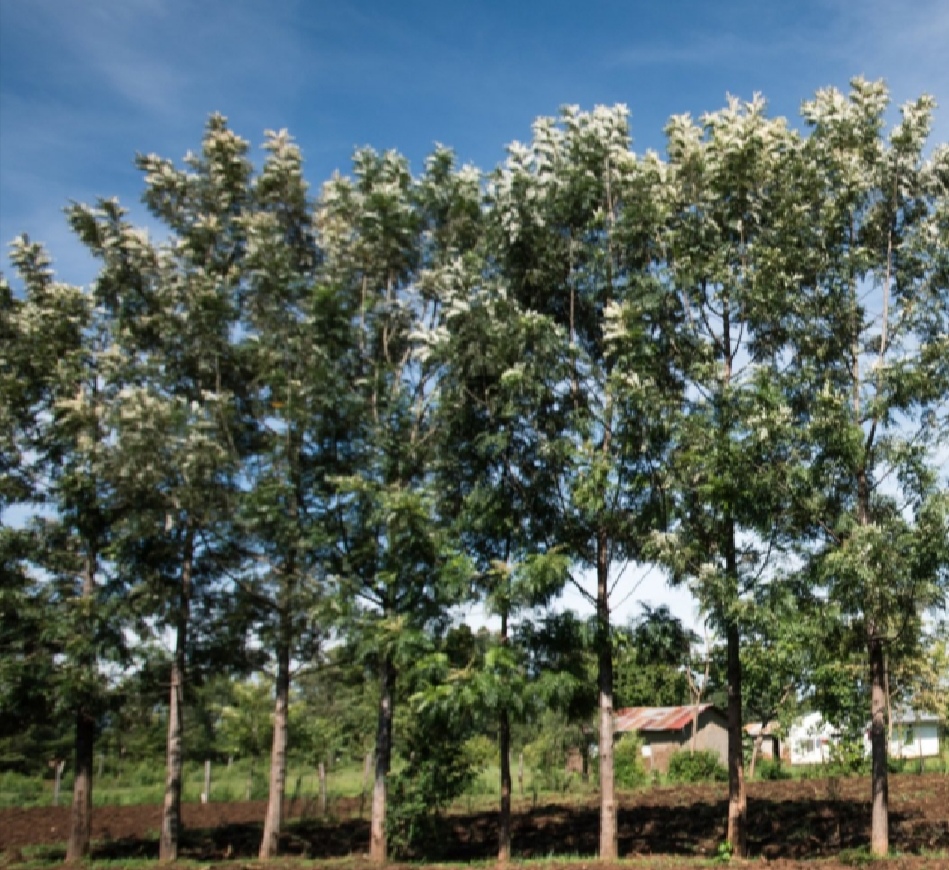
Walk through the coffee farms of Murang’a, the dairy farms of Nyeri, the tea-growing hills of Kericho, or the mixed farms of Meru, and you are likely to find rows of tall Grevillea trees standing above crops. For many farmers, they provide timber, shade, firewood, and an additional source of income without replacing agricultural production.
That widespread adoption is no accident.
Grevillea grows quickly, adapts to many parts of Kenya, and fits well into farming systems. Unlike many commercial tree species, it can often be planted alongside crops with careful management, making it one of the country’s most important agroforestry trees.
Its popularity extends beyond farms.
County governments plant Grevillea along roads. Schools and institutions use it for landscaping. Commercial growers establish plantations for timber production, while beekeepers value its flowers as a reliable nectar source.
Despite its popularity, Grevillea is often misunderstood.
Some farmers believe it dries the soil excessively. Others assume it is suitable for every location. Some prune it incorrectly, reducing timber quality or creating safety risks. These mixed experiences usually result from management practices rather than the tree itself.
Understanding how Grevillea grows, where it performs best, and how to manage it properly helps landowners make better decisions and achieve higher returns.
This guide brings together the scientific knowledge and practical experience needed to grow and manage Grevillea robusta successfully in Kenya.
Scientific Classification
Understanding a tree’s scientific classification helps place it within the wider plant kingdom. It also makes it easier to compare Grevillea with related species and understand its biological characteristics.
| Rank | Classification |
|---|---|
| Kingdom | Plantae |
| Clade | Angiosperms |
| Clade | Eudicots |
| Order | Proteales |
| Family | Proteaceae |
| Genus | Grevillea |
| Species | Grevillea robusta |
The genus Grevillea contains more than 350 species, most of which are native to Australia. However, Grevillea robusta is by far the most widely planted outside its natural range because of its rapid growth, attractive timber, and suitability for agroforestry.
Unlike indigenous Kenyan trees, Grevillea is an introduced species. Even so, it has become firmly established across many farming regions and now plays an important role in commercial forestry and sustainable agriculture.
Common Names
The tree is known by different names depending on the region and the people using it.
| Language | Name |
|---|---|
| English | Silky Oak |
| Scientific | Grevillea robusta |
| Australia | Silk Oak, Silver Oak |
| Kenya | Grevillea (commonly used by farmers and foresters) |
| Kiswahili | Grevillea (no widely accepted traditional Swahili name) |
Unlike many indigenous species, Grevillea does not have established traditional names across most Kenyan communities because it was introduced from Australia. Farmers generally refer to it simply as Grevillea, regardless of language.
Botanical Description
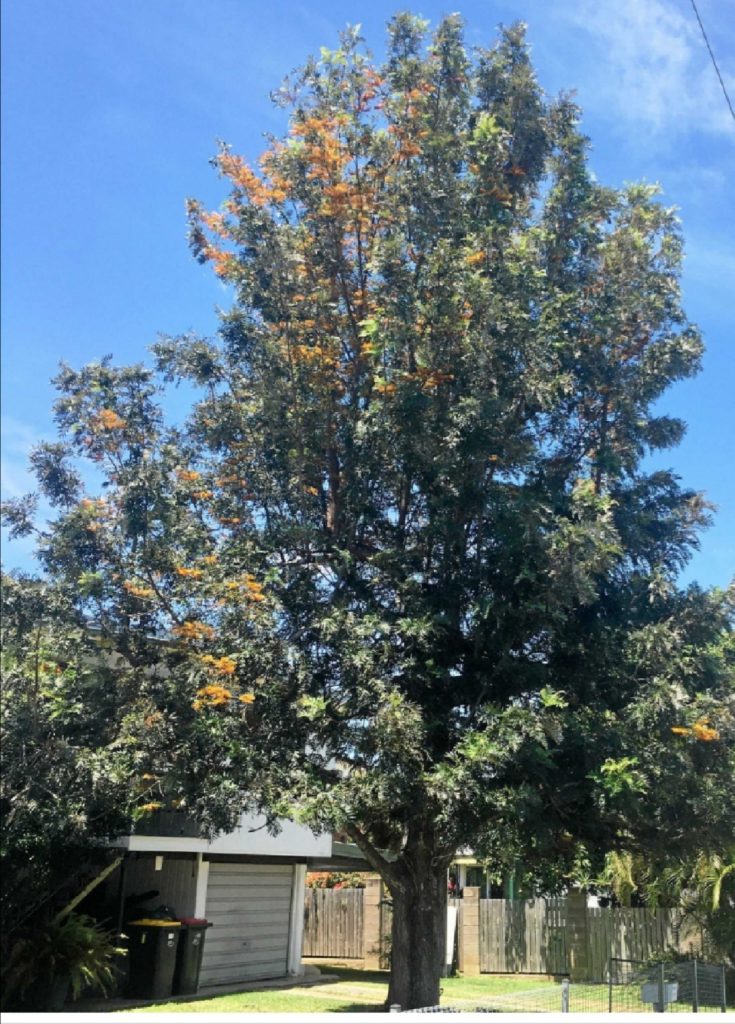
Grevillea robusta is a large evergreen tree with a straight trunk, an open crown, and finely divided fern-like leaves.
When fully mature, it typically reaches between 20 and 35 metres, although exceptional specimens may grow even taller under ideal conditions.
The tree develops a strong central stem during its early years, making it suitable for timber production. With proper pruning, it produces long, straight logs that are highly valued in the timber industry.
Its bark is grey to dark brown and becomes rough and deeply furrowed as the tree ages. Younger branches remain smoother and lighter in colour.
One of Grevillea’s most distinctive features is its foliage.
The leaves are dark green on the upper surface and covered with soft, silvery hairs underneath. When wind moves through the canopy, these pale undersides become visible, creating a shimmering effect that gave rise to the common name Silky Oak.
Although Grevillea resembles an oak in appearance, it is not related to true oak trees.
Flowers
Grevillea produces bright golden-orange flowers that appear in upright clusters during the dry season in many parts of Kenya.
Each flower cluster contains dozens of small individual flowers rich in nectar.
These flowers attract:
- Honey bees
- Native bees
- Butterflies
- Sunbirds
- Other nectar-feeding insects
For beekeepers, flowering Grevillea provides an important source of forage during periods when few other trees are in bloom.
Fruits and Seeds
After flowering, the tree produces small woody fruits known as follicles.
Each fruit usually contains one or two flat, winged seeds.
As the fruits mature, they split open naturally and release the seeds, allowing wind to carry them short distances.
Although Grevillea regenerates naturally in some locations, commercial planting almost always relies on nursery-raised seedlings to ensure uniform growth and better survival.
How to Identify Grevillea robusta
Correct identification is important, particularly when selecting seedlings or surveying mixed forests.
Fortunately, Grevillea has several distinctive characteristics that make it easy to recognise.
Look for these features:
- Tall, upright tree with a straight central trunk.
- Open, lightly spreading crown.
- Deeply divided fern-like leaves.
- Dark green upper leaf surface.
- Silvery underside of leaves.
- Rough grey-brown bark on mature trees.
- Bright orange flower spikes during flowering season.
- Narrow woody seed pods after flowering.
Even from a distance, the combination of fine foliage and shimmering silver leaves makes Grevillea one of the easiest exotic tree species to identify in Kenya.
Field Identification Checklist
| Characteristic | Description |
|---|---|
| Crown | Open and moderately spreading |
| Bark | Grey-brown and deeply furrowed with age |
| Leaves | Fern-like, dark green above, silvery beneath |
| Flowers | Bright golden-orange clusters |
| Fruit | Small woody follicles |
| Growth Form | Tall, straight trunk with high branching |
| Evergreen | Yes |
Key Takeaway
Grevillea robusta has earned its place as one of Kenya’s most widely planted trees because it combines rapid growth, high-quality timber, and excellent compatibility with many farming systems. Its distinctive silver-backed leaves, straight stem, and bright orange flowers make it easy to recognise, while its adaptability has made it a valuable species for farmers, foresters, and landowners across the country.
Distribution and Natural Habitat
Although Grevillea robusta is now one of the most common farm trees in Kenya, it is not indigenous to Africa.
The species originated in the subtropical rainforests of eastern Australia, where it naturally grows along river valleys and moist mountain slopes. It was introduced to many tropical countries during the late nineteenth and early twentieth centuries because of its rapid growth, attractive timber, and ability to thrive in mixed farming systems.
Today, Grevillea is widely planted across Africa, Asia, and South America. Kenya has become one of its most successful homes outside Australia.
Unlike plantation species that are grown only for timber, Grevillea has become part of everyday farming. It is found on small family farms, large commercial estates, school compounds, church land, tea plantations, coffee farms, and urban landscapes.
Its ability to serve many purposes at once has made it one of Kenya’s most valuable agroforestry species.
Distribution in Kenya
Grevillea grows best in Kenya’s highland and upper midland regions, where temperatures are moderate and rainfall is reliable.
It performs particularly well in areas with fertile soils and well-distributed rainfall throughout the year.
The species is now widely planted in many counties, including:
- Nyeri
- Kirinyaga
- Murang’a
- Meru
- Embu
- Kiambu
- Nakuru
- Kericho
- Bomet
- Nandi
- Uasin Gishu
- Elgeyo Marakwet
- Bungoma
- Kakamega
- Trans Nzoia
- Kisii
- Nyamira
- Machakos (cooler highland areas)
- Laikipia
- Parts of Narok
In these regions, Grevillea is commonly integrated into coffee farms, dairy farms, tea plantations, and mixed crop farms.
Its presence has become so widespread that many people assume it is a native Kenyan species.
Where Grevillea Performs Best
Grevillea thrives under moderate climatic conditions.
It grows fastest where rainfall is dependable, soils are deep, and temperatures remain relatively cool throughout the year.
Ideal growing conditions
| Factor | Preferred Range |
|---|---|
| Altitude | 1,200 to 2,300 metres |
| Rainfall | 900 to 2,000 mm annually |
| Temperature | 15°C to 28°C |
| Soil | Deep, fertile, well-drained loam or sandy loam |
| Soil pH | Slightly acidic to neutral (5.5 to 7.0) |
| Sunlight | Full sun |
These conditions are found across much of Kenya’s central and western highlands, which explains why the species has become a favourite among farmers in these regions.
Areas Where Grevillea Is Less Suitable
One of the biggest mistakes landowners make is assuming Grevillea can grow well everywhere.
It cannot.
Although the tree is adaptable, its performance declines significantly under harsh conditions.
Grevillea is generally less suitable for:
- Hot, dry lowlands with prolonged drought.
- Areas prone to seasonal flooding.
- Heavy clay soils that remain waterlogged.
- Extremely saline soils.
- Very high alpine zones with severe frost.
In these environments, farmers are often better served by selecting species naturally adapted to local conditions.
Choosing the right tree for the right site almost always produces better results than trying to force an unsuitable species to grow.
Natural Habitat
In its native Australian range, Grevillea grows within moist subtropical forests.
These forests receive regular rainfall, experience mild temperatures, and contain deep, fertile soils rich in organic matter.
The tree often grows alongside other large forest species, where competition for sunlight encourages it to develop a tall, straight trunk.
These natural characteristics explain why Grevillea responds well to good management in Kenya.
When given enough space, sunlight, and healthy soils, it maintains rapid growth while producing high-quality timber.
Ecology
Grevillea is an important ecological species despite being introduced.
Its flowers produce abundant nectar that supports pollinating insects and birds.
Honey bees visit flowering trees in large numbers, making Grevillea valuable to both commercial and small-scale beekeepers.
Sunbirds, butterflies, and many native insects also depend on its flowers during certain times of the year.
Its canopy provides shelter for birds while helping moderate temperatures on farms.
When managed correctly, the tree contributes to healthier agricultural landscapes by improving habitat diversity.
Soil Requirements
Grevillea performs best in deep, fertile soils with good drainage.
Loose soils encourage strong root development and faster growth.
Poor drainage is one of the few conditions the tree does not tolerate well.
Roots growing in permanently waterlogged soils receive little oxygen, increasing the risk of disease and slow development.
For best results, farmers should avoid planting Grevillea in swampy areas or locations where water remains after heavy rainfall.
Adding organic matter before planting can improve soil structure, particularly in degraded farmland.
Rainfall Requirements
Reliable rainfall supports rapid growth during the tree’s early years.
Young seedlings require consistent moisture while establishing their root systems.
Once established, Grevillea becomes moderately drought tolerant.
However, prolonged dry periods can reduce growth and affect timber quality.
Supplementary watering during the first dry season after planting greatly improves survival rates, especially in areas with unpredictable rainfall.
Temperature and Frost
Grevillea grows well under Kenya’s mild highland temperatures.
Young trees are more sensitive to frost than mature specimens.
Light frost may damage tender shoots, but established trees usually recover once temperatures rise.
Extremely high temperatures combined with prolonged drought can also slow growth.
Selecting sites with suitable climatic conditions remains one of the most important decisions before planting.
Light Requirements
Grevillea is a sun-loving species.
It requires full sunlight for vigorous growth and proper crown development.
Trees growing under heavy shade often become tall and weak as they compete for light.
Open planting sites allow the tree to produce stronger stems, healthier foliage, and better timber.
For commercial plantations, proper spacing ensures every tree receives adequate sunlight throughout its development.
Root System
Grevillea develops a strong root system that anchors the tree while helping it access moisture from deeper soil layers.
Compared with many fast-growing tree species, its roots are generally less aggressive near the soil surface.
This characteristic explains why Grevillea has become one of Kenya’s preferred agroforestry trees.
When managed through appropriate spacing and pruning, it often coexists successfully with crops such as coffee, beans, bananas, fodder grasses, and pasture.
That said, no tree is completely free from competition.
Poor spacing or excessive planting density can still reduce crop yields by competing for sunlight, water, and nutrients.
Good farm planning remains essential.
Suitable Agroecological Zones
Grevillea performs particularly well in:
- Upper Midland zones.
- Lower Highland zones.
- Tea-growing regions.
- Coffee-growing regions.
- Dairy farming areas.
- Mixed crop farming systems.
It is less suited to Kenya’s arid and semi-arid lands unless irrigation is available during establishment.
Table: Grevillea Growing Conditions at a Glance
| Requirement | Ideal Condition |
|---|---|
| Altitude | 1,200 to 2,300 m |
| Rainfall | 900 to 2,000 mm |
| Temperature | 15°C to 28°C |
| Sunlight | Full sun |
| Soil Drainage | Excellent |
| Soil Fertility | Moderate to high |
| Drought Tolerance | Moderate after establishment |
| Frost Tolerance | Moderate for mature trees |
| Waterlogging | Poor tolerance |
Uses and Economic Value
Few tree species in Kenya are as versatile as Grevillea robusta.
A single tree can provide timber, shade, fuelwood, bee forage, erosion control, and environmental benefits at the same time. This versatility explains why Grevillea has become a familiar feature on farms, institutions, and commercial plantations across the country.
Its value also grows over time.
While annual crops are harvested within months, Grevillea becomes more valuable as it matures. With proper management, it can generate income while continuing to support farming activities.
Timber Production
Timber is Grevillea’s biggest commercial use.
The wood is moderately strong, easy to work with, and has an attractive grain that makes it popular among carpenters and furniture manufacturers.
Unlike some hardwoods that are difficult to machine, Grevillea cuts, sands, and finishes well. This reduces processing costs and makes it suitable for a wide range of products.
Common timber products include:
- Furniture
- Doors
- Window frames
- Cabinets
- Shelving
- Interior wall panels
- Decorative joinery
- Light construction timber
The wood ranges from pale golden brown to light reddish brown and develops an attractive finish after polishing.
Although it is not as durable outdoors as naturally durable hardwoods, proper treatment significantly extends its service life.
Furniture Manufacturing
Grevillea has become one of Kenya’s preferred furniture timbers.
Its attractive grain gives finished products a warm, natural appearance, while its moderate weight makes it easier to transport and work with.
It is commonly used to produce:
- Dining tables
- Office desks
- Beds
- Wardrobes
- Kitchen cabinets
- Bookshelves
- Chairs
Many local workshops prefer Grevillea because it machines cleanly and accepts stains, paints, and varnishes without difficulty.
Agroforestry
Grevillea’s greatest strength is not timber alone.
It is one of Kenya’s most successful agroforestry trees.
Unlike dense-canopy species that heavily shade crops, Grevillea has an open crown that allows filtered sunlight to reach the ground.
This makes it suitable for integration with crops such as:
- Coffee
- Tea
- Bananas
- Napier grass
- Beans
- Fodder crops
- Pasture
Its leaves also decompose relatively quickly, returning organic matter to the soil.
For many farmers, Grevillea provides an additional income stream without replacing food production.
That flexibility has made it one of the most widely planted farm trees in East Africa.
Shade for Coffee and Tea
Coffee performs best under moderate shade, particularly in warmer growing areas.
Grevillea provides that shade without creating a dense canopy that blocks excessive sunlight.
The tree also helps moderate temperatures within coffee farms, reducing moisture loss during hot periods.
Tea plantations also use Grevillea in selected areas as wind protection and boundary planting.
Good pruning is essential.
Poorly managed trees can produce excessive shade, reducing crop productivity.
When properly maintained, however, Grevillea and coffee often complement each other remarkably well.
Windbreaks and Shelterbelts
Strong winds can damage crops, dry out soils, and reduce farm productivity.
Rows of Grevillea planted along farm boundaries help reduce wind speed while protecting crops, livestock, and buildings.
Windbreaks can also reduce soil erosion by limiting the movement of loose topsoil during dry seasons.
On larger farms, shelterbelts improve growing conditions across entire fields while creating natural property boundaries.
Firewood
Although Grevillea is primarily grown for timber, it also provides good-quality firewood.
Branches removed during routine pruning rarely go to waste.
Instead, they are commonly used as household fuel or sold locally.
The wood burns well after seasoning and produces relatively little smoke compared to some other species.
Using pruned branches as fuel also reduces pressure on indigenous forests.
Charcoal Production
Grevillea can be converted into charcoal, but this is generally not considered its highest-value use.
A mature timber tree usually generates greater economic returns when processed into lumber rather than charcoal.
Where charcoal production is practiced, it is often made from offcuts, branches, or trees that are unsuitable for timber.
For most farmers, maximizing timber value is the more profitable option.
Bee Forage and Honey Production
Grevillea is highly valued by beekeepers.
Its bright orange flowers produce abundant nectar that attracts honey bees throughout the flowering season.
In areas where flowering overlaps with periods of limited natural forage, Grevillea helps sustain healthy bee colonies.
The tree also supports:
- Native bee species
- Butterflies
- Sunbirds
- Other beneficial pollinators
For farmers combining forestry with apiculture, Grevillea creates another opportunity to diversify income.
Soil Conservation
Healthy soils are the foundation of productive farming.
Grevillea contributes to soil conservation in several ways.
Its roots help stabilize the ground, particularly on sloping land where erosion is common.
Leaf litter forms a natural mulch that protects the soil surface, improves organic matter, and reduces moisture loss.
These benefits become more noticeable over time, especially where trees are integrated into long-term farming systems.
Carbon Storage
Like all trees, Grevillea captures carbon dioxide from the atmosphere through photosynthesis.
Part of this carbon becomes stored in its trunk, branches, roots, and surrounding soil.
As interest in climate-smart agriculture continues to grow, trees such as Grevillea are becoming increasingly important for reducing greenhouse gas emissions while improving farm resilience.
Although most small farmers are not yet participating directly in carbon markets, well-managed tree planting contributes to broader climate mitigation efforts.
Landscaping and Urban Planting
Grevillea is also appreciated for its appearance.
Its fern-like leaves and symmetrical crown make it an attractive ornamental tree in parks, schools, churches, hotels, and institutional compounds.
Because it grows relatively quickly, it provides shade within a few years while improving the visual character of open spaces.
Its flowers also attract birds and pollinators, increasing urban biodiversity.
However, planners should allow adequate space around mature trees to accommodate their height and spreading branches.
Boundary Planting
Many Kenyan farmers plant Grevillea along property boundaries.
This approach provides several advantages.
It clearly marks land ownership.
It minimizes competition with crops.
It creates future timber resources without reducing productive farmland.
Boundary planting also simplifies harvesting because machinery and workers can access trees more easily.
Commercial Value
Grevillea has become an important part of Kenya’s farm forestry economy.
Its popularity is driven by more than fast growth.
Farmers value it because it offers several income opportunities from a single investment.
Potential revenue sources include:
- Timber sales.
- Seedling production.
- Poles.
- Firewood.
- Honey production.
- Tree pruning products.
- Farm improvement through agroforestry.
Returns vary depending on location, management, timber quality, and market demand.
Farmers who prune correctly, maintain straight stems, and allow adequate growing time generally achieve higher timber values than those who neglect tree management.
Table: Major Uses of Grevillea robusta
| Use | Importance | Typical Users |
|---|---|---|
| Timber | High | Farmers, sawmills, furniture makers |
| Furniture | High | Carpenters, manufacturers |
| Agroforestry | High | Mixed crop farmers |
| Coffee Shade | High | Coffee growers |
| Windbreaks | Medium | Crop and livestock farmers |
| Firewood | Medium | Rural households |
| Bee Forage | Medium | Beekeepers |
| Soil Conservation | High | Farmers on sloping land |
| Landscaping | Medium | Schools, institutions, counties |
| Carbon Storage | Growing | Climate and restoration projects |
Is Grevillea a Good Investment?
For many landowners, the answer is yes.
Grevillea combines relatively fast growth with multiple uses and steady market demand. It fits well into existing farming systems and does not require farmers to abandon crop production.
Like any long-term investment, success depends on choosing the right site, planting quality seedlings, and managing the trees properly.
A poorly managed Grevillea plantation may produce low-quality timber.
A well-managed one can continue providing environmental and economic benefits for decades.
Key Takeaway
Grevillea’s greatest strength is its versatility. It is not simply a timber tree or a shade tree. It is a productive agroforestry species that supports farming, generates income, protects soils, feeds pollinators, and contributes to more resilient agricultural landscapes. That combination has made it one of the most valuable trees grown in Kenya today.
Propagation and Plantation Management
Growing healthy Grevillea trees begins long before the first seedling is planted.
Success depends on choosing quality planting material, preparing the site properly, and managing the trees during their early years. Small decisions made at the beginning often determine whether a tree produces high-value timber or develops into a poorly formed tree with limited commercial value.
The good news is that Grevillea is relatively easy to establish when basic forestry principles are followed.
Propagation
Grevillea robusta is propagated primarily from seed.
This is the most reliable and economical method for producing large numbers of healthy seedlings. While vegetative propagation is possible under controlled conditions, it is rarely used for commercial forestry in Kenya because it is more expensive and technically demanding.
Most farmers purchase certified seedlings from reputable nurseries rather than raising their own.
Seed Collection
Seeds should be collected from healthy, mature trees with straight stems, good branching patterns, and vigorous growth.
Selecting seed from poor-quality trees increases the chances of producing inferior offspring.
After flowering, Grevillea produces woody seed pods that gradually dry on the tree.
Once mature, the pods split naturally and release their winged seeds.
For nursery production, pods should be collected before they open fully to reduce seed loss.
Seed Preparation
Fresh Grevillea seed usually germinates well without complex treatment.
However, removing debris and selecting clean, well-developed seed improves germination rates.
Seeds should be stored in cool, dry conditions if they are not planted immediately.
Long storage periods may reduce viability, so fresh seed is generally preferred.
Nursery Management
A healthy nursery produces healthy plantations.
Seed should be sown in clean, well-drained growing media with adequate organic matter.
Once seedlings emerge, they require:
- Regular watering.
- Good sunlight.
- Weed control.
- Protection from pests.
- Adequate spacing between containers.
Overwatering is a common mistake.
Waterlogged nursery media encourages root diseases and weak seedling development.
The goal is consistent moisture, not permanently wet soil.
Choosing Quality Seedlings
Not every seedling is worth planting.
Strong seedlings establish faster, survive better, and produce straighter trees.
When buying seedlings, look for:
- Healthy green leaves.
- Straight stems.
- Well-developed root systems.
- No signs of pests or disease.
- Uniform growth.
Avoid seedlings that appear stunted, yellow, root-bound, or damaged.
A slightly cheaper seedling often becomes the most expensive mistake in the field.
Site Preparation
Good site preparation improves survival and early growth.
Before planting, remove weeds that will compete for moisture and nutrients.
Planting holes should be prepared several weeks before the rainy season.
In compact soils, loosening the surrounding soil encourages deeper root development.
Where organic manure is available, mixing small amounts into the topsoil can improve establishment.
Fresh manure should be avoided because it may damage young roots.
Best Time to Plant
The best planting time is at the beginning of the rainy season.
Natural rainfall helps seedlings establish quickly while reducing the need for supplementary watering.
In most parts of Kenya, this means planting during:
- The long rains.
- The short rains where rainfall is reliable.
Planting during prolonged dry periods significantly increases mortality unless irrigation is available.
Spacing
Proper spacing is one of the most important management decisions.
Trees planted too closely compete for sunlight, water, and nutrients.
Trees planted too far apart may produce large branches and lower-quality timber.
The ideal spacing depends on the intended purpose.
Recommended spacing
| Objective | Suggested Spacing |
|---|---|
| Timber plantation | 3 m × 3 m |
| Agroforestry | 6 to 12 m between trees depending on crops |
| Boundary planting | 3 to 5 m |
| Windbreaks | 2.5 to 4 m |
Farmers growing coffee or other crops often use wider spacing to reduce competition while maintaining adequate shade.
Watering
Young Grevillea seedlings benefit from regular watering during dry periods.
Once established, the species becomes moderately drought tolerant.
Watering is most important during the first one to two growing seasons.
Deep watering is generally more effective than frequent light irrigation because it encourages stronger root development.
Weed Management
Weeds compete directly with young trees.
They reduce available water, nutrients, and sunlight during the establishment phase.
Maintaining a weed-free area around each seedling greatly improves growth.
Mulching also helps by:
- Conserving soil moisture.
- Suppressing weeds.
- Improving soil organic matter.
- Reducing temperature fluctuations.
Organic mulch should not touch the stem directly, as this may encourage pests and diseases.
Fertiliser Requirements
Grevillea usually performs well without heavy fertiliser application on fertile soils.
However, nutrient-deficient sites may benefit from balanced fertiliser or well-decomposed compost during establishment.
A soil test provides the most reliable guide for nutrient management.
Applying fertiliser without understanding soil conditions can waste money and produce poor results.
Healthy soils remain the best long-term investment.
Pruning
Pruning is one of the most important practices in Grevillea management.
Unfortunately, it is also one of the most misunderstood.
Many farmers remove large branches too late or cut the tree incorrectly, leaving wounds that reduce timber quality.
The objective of pruning is simple.
Produce a straight stem with as few knots as possible.
Early pruning removes lower branches before they become large.
This allows the tree to produce clear, high-value timber.
Only clean, sharp tools should be used, and unnecessary pruning should be avoided.
Formative Pruning
During the first few years, Grevillea may develop competing leaders.
If multiple stems are allowed to grow, the tree often develops poor form.
Formative pruning removes competing stems early, encouraging a single, straight trunk.
This small intervention greatly increases future timber value.
Thinning
In plantation forestry, not every tree remains until harvest.
As trees grow, competition increases.
Thinning removes selected trees to provide additional growing space for the best-performing individuals.
Benefits of thinning include:
- Faster diameter growth.
- Better timber quality.
- Improved crown development.
- Reduced competition for nutrients and water.
Trees removed during thinning may still provide poles or firewood, creating intermediate income before final harvest.
Rotation Period
The ideal harvesting age depends on the intended product.
Small poles can be harvested earlier than sawlogs.
High-quality timber requires patience.
Typical rotation periods are:
| Product | Approximate Rotation |
|---|---|
| Firewood | 5 to 7 years |
| Poles | 8 to 12 years |
| Timber | 15 to 25 years |
Good management throughout the rotation often has a greater influence on timber quality than the exact harvesting age.
Common Planting Mistakes
Many Grevillea problems begin with poor management rather than poor genetics.
Some of the most common mistakes include:
- Planting unsuitable seedlings.
- Poor site selection.
- Planting during dry weather.
- Inadequate spacing.
- Delayed pruning.
- Ignoring weeds during establishment.
- Allowing livestock to damage young trees.
- Expecting rapid timber returns without management.
Most of these mistakes are easy to avoid with proper planning.
Table: Best Management Practices for Grevillea
| Practice | Recommendation |
|---|---|
| Planting Season | Beginning of the rainy season |
| Seedling Source | Certified nursery |
| Soil | Deep and well-drained |
| Weed Control | Regular during first two years |
| Watering | During establishment if rainfall is insufficient |
| Pruning | Early and gradual |
| Thinning | As plantation competition increases |
| Harvest Planning | Based on intended end use |
Key Takeaway
Grevillea is relatively easy to grow, but producing high-quality timber requires active management. Good seedlings, proper spacing, timely pruning, and regular maintenance consistently produce better trees than simply planting and waiting for them to mature.
Pests and Diseases
Grevillea robusta is generally considered a hardy tree. Under good growing conditions, it experiences relatively few serious health problems compared to many commercial forestry species.
That said, no tree is immune to pests and diseases. Poor site selection, drought stress, overcrowding, or poor management can make trees more vulnerable to attack.
Routine inspection allows problems to be identified early, when they are easier and less costly to manage.
Common Insect Pests
Young Grevillea trees are more susceptible to insect damage than mature trees.
The most common pests include:
- Aphids
- Scale insects
- Caterpillars
- Leaf-eating beetles
- Termites attacking newly planted seedlings
Most infestations cause only minor damage and can often be controlled through good tree health and natural predators.
Healthy trees are usually able to recover from light pest attacks without significant long-term effects.
Common Diseases
Grevillea is relatively resistant to major diseases, but several problems may occur under unsuitable growing conditions.
These include:
- Root rot in poorly drained soils.
- Fungal leaf spots during prolonged wet weather.
- Stem cankers on stressed or wounded trees.
- Nursery damping-off affecting young seedlings.
Many of these diseases are linked to excessive moisture rather than the tree itself.
Good drainage and proper spacing remain the most effective preventive measures.
Signs of an Unhealthy Tree
Regular inspection helps farmers identify problems before they become serious.
Watch for:
- Yellowing leaves.
- Premature leaf drop.
- Dead branches.
- Poor growth.
- Cracked or damaged bark.
- Unusual fungal growth.
- Heavy insect infestations.
A tree showing several of these symptoms should be examined to determine whether the cause is nutritional, environmental, or biological.
Preventing Problems
Most Grevillea health issues can be prevented through good management.
Best practices include:
- Plant certified seedlings.
- Choose suitable planting sites.
- Avoid waterlogged soils.
- Prune correctly.
- Maintain recommended spacing.
- Remove dead or diseased branches.
- Monitor young trees regularly.
Preventive management is almost always more effective than treating severe infestations after they occur.
Conservation Status
Grevillea robusta is classified globally as a species of Least Concern.
Its natural populations remain stable in Australia, and it is widely cultivated throughout the world.
In Kenya, the species is not considered threatened.
Instead, it has become one of the country’s most widely planted farm trees, contributing to timber production, agroforestry, and landscape restoration.
Its widespread cultivation also reduces harvesting pressure on many indigenous timber species by providing an alternative source of wood.
Climate Change and Future Outlook
Climate change is reshaping forestry across Kenya.
Changing rainfall patterns, rising temperatures, and more frequent droughts are affecting tree growth, survival, and productivity.
Grevillea offers several advantages in this changing environment.
Its relatively fast growth allows farms to establish tree cover quickly. It also stores carbon, protects soils, and improves the resilience of farming systems when integrated with crops.
However, changing climate conditions may also alter where the species performs best.
Areas that become hotter and drier may experience slower growth or increased stress, while cooler highland regions are likely to remain suitable for commercial planting.
Selecting the right species for local conditions will become increasingly important as the climate continues to change.
Similar Species
Grevillea is sometimes confused with other fast-growing timber trees, particularly by new farmers.
Understanding the differences helps landowners choose the right species for their objectives.
| Species | Main Use | Key Difference |
|---|---|---|
| Grevillea robusta | Timber, agroforestry, shade | Open canopy and good crop compatibility |
| Eucalyptus grandis | Timber, poles | Faster growth but greater competition for water in some situations |
| Cupressus lusitanica | Construction timber | Dense evergreen canopy and conical shape |
| Pinus patula | Timber, pulpwood | Needle-like leaves and cone-bearing tree |
| Markhamia lutea | Shade, ornamental, timber | Indigenous species with yellow trumpet-shaped flowers |
Each species has strengths and limitations.
The best choice depends on climate, soil, available space, and the intended use of the trees.
Should You Plant Grevillea?
Grevillea is an excellent choice for many landowners, but it is not the right tree for every situation.
The following guide can help.
Grevillea is a good choice if you:
- Farm in Kenya’s highland or upper midland regions.
- Want to combine trees with crops or livestock.
- Need quality timber in the future.
- Want shade for coffee or livestock.
- Are interested in long-term farm diversification.
- Have well-drained soils.
You may want to consider another species if you:
- Farm in very hot, dry lowlands.
- Have permanently waterlogged soils.
- Need timber within only a few years.
- Have very limited planting space.
- Need species adapted to arid or coastal environments.
Selecting the right tree is always more important than selecting the most popular one.
Frequently Asked Questions
Is Grevillea robusta native to Kenya?
No. Grevillea robusta is native to eastern Australia but has been successfully introduced to Kenya, where it is now one of the most widely planted agroforestry trees.
How fast does Grevillea grow?
Under good conditions, Grevillea grows quickly and can reach several metres within its first few years. Growth depends on rainfall, soil fertility, and management.
Is Grevillea good for agroforestry?
Yes. Its open canopy and manageable growth habit make it one of Kenya’s preferred trees for agroforestry systems, particularly alongside coffee, pasture, and other crops.
Does Grevillea compete with crops?
Like all trees, Grevillea competes for water, nutrients, and sunlight. However, proper spacing and regular pruning help minimise competition, allowing it to coexist successfully with many farming systems.
How long does it take before Grevillea can be harvested?
Trees grown for timber are commonly harvested after 15 to 25 years, depending on site quality and management objectives. Smaller products such as poles can be harvested earlier.
Is Grevillea good for bees?
Yes. Its nectar-rich flowers attract honey bees, native bees, butterflies, and sunbirds, making it a valuable species for supporting pollinators and honey production.
Can Grevillea be planted on small farms?
Yes. Many smallholder farmers plant Grevillea along boundaries or integrate it into mixed farming systems to produce timber without sacrificing large areas of productive land.
What type of soil does Grevillea prefer?
The tree grows best in deep, fertile, well-drained soils. Poor drainage is one of the main factors that limits its growth.
Final Thoughts
Grevillea robusta has earned its place as one of Kenya’s most valuable farm trees because it delivers more than timber.
It supports productive farms, strengthens agroforestry systems, provides shade, protects soils, stores carbon, and creates long-term economic opportunities for landowners. Few tree species offer such a broad combination of environmental and commercial benefits.
Its success, however, depends on good management. Choosing the right site, planting healthy seedlings, maintaining proper spacing, and pruning correctly all contribute to better growth and higher-quality timber.
For farmers, investors, and landowners looking to build more resilient and profitable landscapes, Grevillea remains one of the strongest choices available.
Suggested Tags (for publication):
Grevillea robusta, Silky Oak, Grevillea Kenya, Agroforestry, Tree Species Kenya, Timber Trees, Farm Forestry, Forestry.co.ke, Sustainable Forestry

Leave a Reply